
Winter changes the landscape completely. The vibrant greens of the grass and the colorful leaves of autumn disappear under a blanket of white. Your backyard becomes a monochromatic scene. This shift brings the color of your deck into sharp focus. It becomes the anchor of your outdoor space.
Choosing the right hue ensures your home looks inviting even in the deepest freeze. You want a color that complements the snow rather than getting lost in it. The best winter deck color ideas utilize contrast and warmth to create a visual break from the cold.
The Visual Impact of Darker Tones
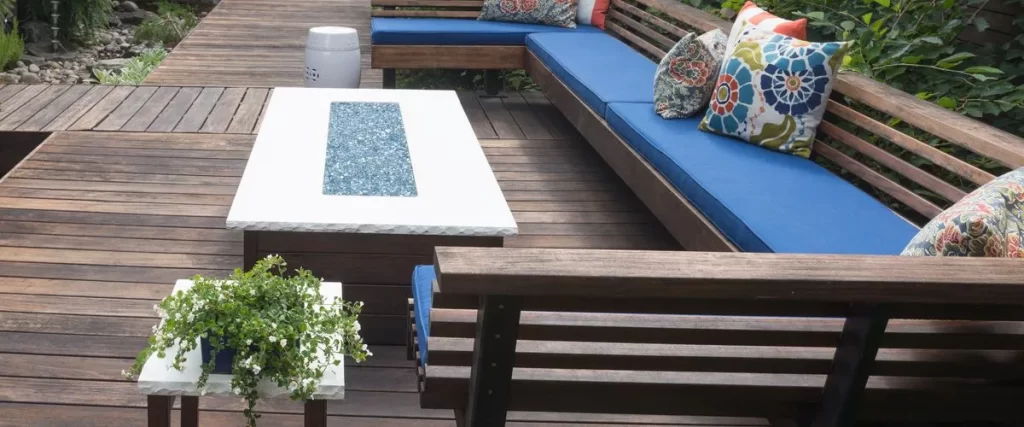
Snow is bright. It reflects sunlight and creates a stark white canvas. A light gray or white deck often disappears into this background. This creates a washed-out look that lacks definition.
Darker colors provide immediate grounding. They create a boundary between the home and the yard. A deep charcoal or a rich espresso stain creates a stunning frame for the snow. The white powder resting on a dark railing creates a crisp, clean line that looks architectural and deliberate.
- Choose deep browns to mimic the look of tree bark and natural forest elements.
- Select charcoal grey for a modern aesthetic that pairs well with stone features.
- Consider black accents on railings to define the perimeter of the space clearly.
There is a functional benefit to these choices as well. Dark surfaces absorb heat from the sun. Even on freezing days, a dark deck absorbs solar energy. This helps melt thin layers of ice and snow faster than a lighter surface would. It clears your walking path naturally.
Embracing Warmth with Red and Brown Hues
Winter light is often blue and cool. The shadows on the snow lean towards violet. To counter this chill, you can introduce warm tones through your deck boards.
Redwood and cedar stains are excellent choices. They bring a natural warmth that feels cozy. These colors remind us of fire and earth. When you look out the window at a mahogany-colored deck covered in frost, the contrast creates a welcoming environment.
- Use cedar tones to add a golden glow to the backyard palette.
- Apply mahogany stains for a rich, luxurious feel that stands out against white.
- Look for copper undertones that catch the low winter sun.
These shades work exceptionally well if your home has beige or cream siding. They bridge the gap between the house and the stark white yard. They maintain a connection to nature even when the garden is dormant.
The Elegance of Cool Greys and Blues
You might prefer to lean into the winter aesthetic rather than fight it. Cool colors can look sophisticated and serene. A slate blue or a weathered grey harmonizes with the winter sky.
This approach creates a seamless transition from the surroundings to the living area. It feels peaceful. The trick is to ensure the grey has enough depth to not look like dirty snow. You need a saturated tone.
- Pick slate blue to mirror the shadows cast by trees on the snow.
- Opt for weathered grey to achieve a rustic, established appearance.
- Combine cool tones with white trim for a classic, crisp look.
A grey deck serves as a neutral foundation. It allows you to change your décor with the seasons easily. Red pillows in winter pop against the grey. Bright yellow flowers in summer look equally good. It is a versatile choice for year-round appeal.
Light Colors and the Airy Aesthetic
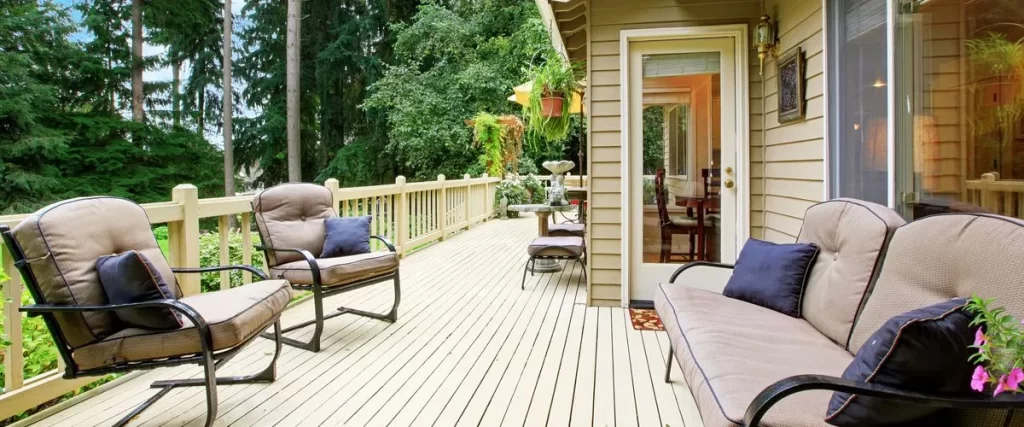
Some homeowners love the look of a “winter wonderland” and want to maintain that airy feel. Lighter colors like sand, beige, or even an off white can work if done correctly.
The key here is texture. A flat white paint might look lost. A semi-transparent stain that shows the wood grain adds visual interest. It gives the eye something to catch onto.
- Use sandy beige to keep the space feeling open and bright.
- Choose off white paints with warm undertones to avoid a sterile look.
- Incorporate texture through the wood grain to separate the deck from the snow.
Light colors have the advantage of staying cooler in the summer. If your deck sits in direct, scorching sun during July, a light color reflects that heat. You have to balance the winter aesthetic with summer comfort.
Material Considerations: Paint vs. Stain vs. Composite
The material you choose affects how the color reads. Paint sits on top of the surface. It provides a solid, uniform color. This is great for hiding imperfections in older wood decks. It allows for bold color choices that nature cannot produce on its own.
Stain penetrates the wood fibers. It enhances the natural beauty of the grain. Stains range from clear to solid. A solid stain offers the protection of paint with the look of timber.
Composite decking is a different category. The color is engineered into the board. It does not fade or chip like paint. Manufacturers offer complex color blends. A single board might have streaks of hickory, charcoal, and saddle brown. This variation looks incredibly natural against the flat white of snow.
- Check composite samples outside to see how they look in different lighting conditions.
- Use oil-based stains for deep penetration and resistance to moisture.
- Test paint colors on a small area to see how they dry before committing.
Brands like Benjamin Moore offer extensive lines of exterior paints and stains. They provide durable options designed to withstand the freeze-thaw cycle. Quality is vital here. Cheap paint will peel after one winter, leaving your deck looking distressed in the wrong way.
Coordinating with Your Home’s Exterior
Your deck is an extension of your house. The color must make sense with the existing architecture. You are creating a cohesive overall look.
Look at the permanent features of your home. Consider the brick, the stone, the siding, and the roof. If you have a red brick house, a redwood deck might clash. A cool grey or a deep brown would likely suit it better.
- Match the trim of the house to the railing for a unified appearance.
- Contrast the siding to make the deck a distinct structural element.
- Consider the door color and try to echo that shade on the deck floor.
White railings are a classic choice for a reason. They act as a picture frame. Even if the floor is dark, the white railing connects the deck to the white trim of the windows and gutters. It defines the outdoor living space clearly.
Utilizing Furniture and Décor for Pops of Color
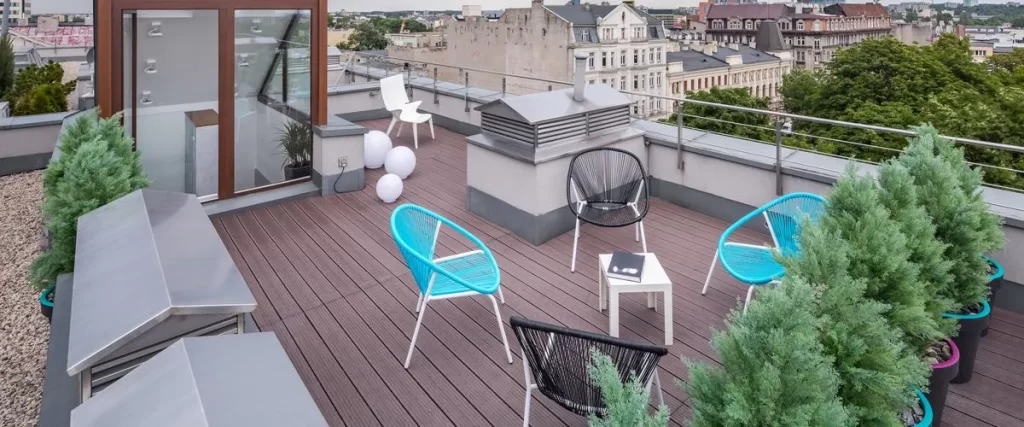
You might not be ready to repaint the entire surface. You can still change the visual impact of your deck using outdoor furniture and accessories.
In the winter, the furniture that stays out needs to be durable. Teak benches, metal chairs, and heavy stone tables remain in place. The cushions usually go into storage. This leaves the frame of the furniture exposed.
- Select colorful frames for chairs to add brightness to the empty deck.
- Place large planters with evergreen boughs to introduce green.
- Add an outdoor rug that is weather-resistant to cover a faded floor.
These elements create a focal point. They draw the eye out of the house. A bright red Adirondack chair sitting in the snow is an iconic winter image. It invites you to imagine sitting there, even if it is too cold to actually do so.
The Role of Lighting in Winter Color
The sun sets early in the winter months. You will often view your deck in the dark or under artificial light. The color you choose needs to look good under deck lights too.
Warm LED lights can make a red deck glow. They can make a grey deck look cozy. Cold, blue-toned lights can make a space feel clinical.
Reflective surfaces matter here. A semi-gloss paint reflects the sparkle of the snow and the glow of the lights. A matte stain absorbs the light.
- Install post cap lights to illuminate the perimeter and show off the railing color.
- Use stair lights to highlight the color difference between the tread and the riser.
- Adjust the lighting temperature to enhance the underlying tones of the wood.
Maintenance and Practicality
Winter is harsh on surfaces. Snow shovels scrape against the floor. Ice melts and refreezes. The color you choose has to stand up to this abuse.
Dark colors show scratches more easily than light ones. If you drag a plastic shovel across a black painted deck, the white scratch will be visible. Lighter wood stains hide these marks better.
Dirt is another factor. Winter involves mud and slush. A very light deck shows every muddy paw print. A mid-tone brown or grey disguises the dirt until you can wash it in the spring.
- Choose mid-tone shades to hide salt residue and general winter grime.
- Avoid high gloss finishes that become slippery and highlight imperfections.
- Inspect the finish annually to touch up high-traffic areas before snow falls.
Planning for the Year-Round View
You enjoy the view of your deck from the interior more often than you stand on it during winter. The color should flow with your interior design.
If your living room has hardwood floors, consider a deck color that complements them. It creates the illusion of a larger room when you look through the glass doors. The deck becomes a visual continuation of the floor.
- Harmonize interior flooring with exterior decking for a seamless transition.
- View color samples from inside the house to see the relationship.
- Ensure the view is pleasing from the kitchen and living room windows.
Finding Your Perfect Palette
There is no single “best” color. The right choice depends on your home, your landscape, and your personal style.
Nature provides the best inspiration. Look at the trees in your yard that keep their bark. Look at the stones in your garden. Pulling colors from these natural elements ensures your deck fits into the environment.
A well-chosen color transforms a deck from a flat platform into a design feature. It enhances the home’s curb appeal in every season. It turns a bleak winter view into a scene of contrast and beauty.
Getting the Job Done
Picking a color is the fun part. The actual labor of stripping, sanding, and painting is a different story. It requires clear weather, specific temperatures, and a lot of patience. If the wood is damaged, painting over it won’t solve the problem. Sometimes the boards are too far gone, or the structure underneath needs attention.
You might be looking at your deck right now, realizing that a fresh coat of paint isn’t enough to save it. You might be dreaming of a brand new composite space that requires zero sanding next year.
If you want to skip the cold, messy work and ensure your outdoor space is built to last, you need a team that understands the materials inside and out. You can learn more about the fundamentals of quality deck building to see what goes into a lasting structure.
If you would rather sip hot cocoa inside while we handle the heavy lifting and freezing temperatures, we are just a phone call away. Call us at (402) 369-5724 or message us here.