
Spring arrives with longer days and warmer temperatures, drawing many homeowners back to their outdoor living spaces. But before you fire up the grill or set up the patio furniture, take a close look at your deck. Winter weather can be harsh on wooden decks and composite decking alike, and what looks like cosmetic damage might signal deeper problems with your deck’s structural integrity.
Knowing when to call for deck repairs versus planning a full deck replacement can save you money and keep your family safe. Some warning signs are obvious. Others hide beneath the deck surface, making them easy to miss until they become safety hazards.
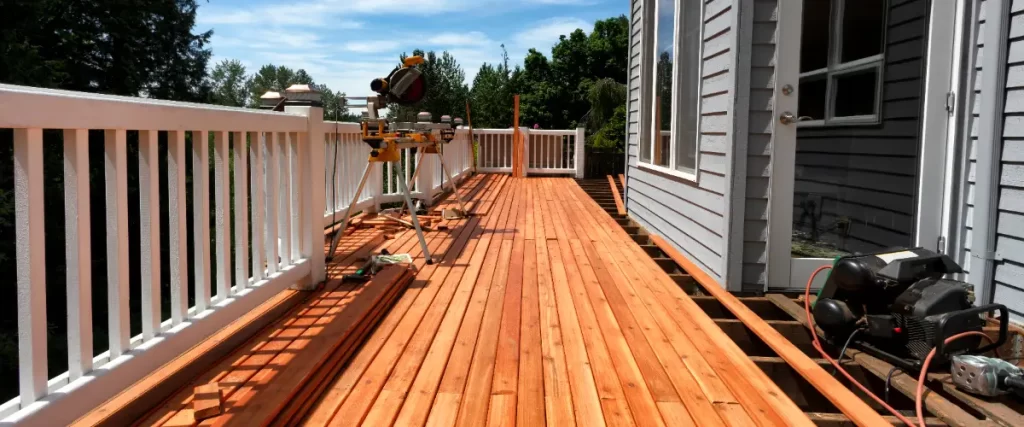
Start With the Deck Boards
Walk across your entire deck and pay attention to how it feels under your feet. A solid deck shouldn’t bounce or feel spongy. If you notice movement when you walk, something underneath needs attention.
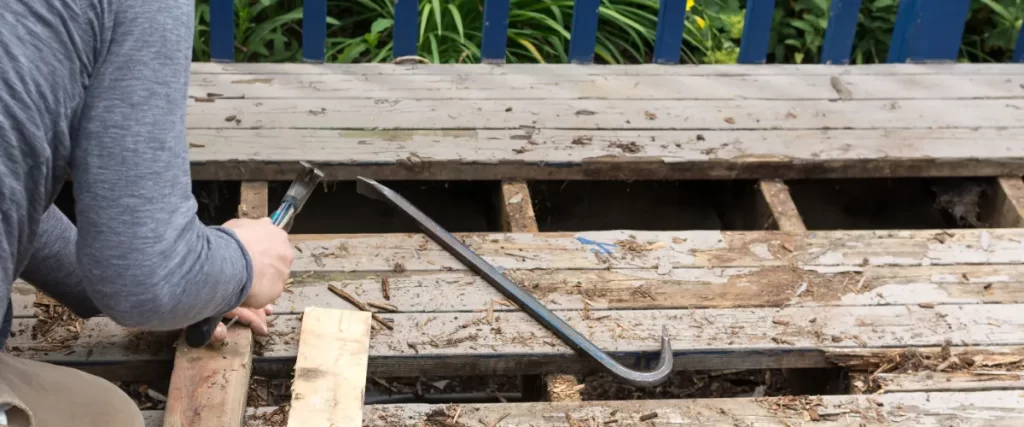
Look closely at individual boards. Cracked or splintered boards are common after winter, but the severity matters. Small cracks in one or two boards usually mean simple repair work. When you see splintered wood across multiple boards or notice uneven decking that wasn’t there before, the damage runs deeper.
Press on boards with your foot. Loose boards that shift under pressure might just need tightening screws, but they could also indicate rotting wood underneath. If numerous boards feel soft or crumbly when you apply pressure, you’re looking at widespread damage that goes beyond minor repairs.
Check for Wood Rot
Wood rot is a major concern for any wooden deck. It weakens the wood fibers from the inside out and can spread quickly if left untreated. Spring’s combination of moisture and warming temperatures creates ideal conditions for rot to develop.
Test suspicious areas with a screwdriver. Push the tip into the wood. Healthy wood resists penetration. Rotted wood allows the screwdriver to sink in easily, sometimes an inch or more. Focus your inspection on areas that trap water or stay damp.
Common trouble spots include:
- Areas where deck boards meet the posts
- Spots where water pools after rain
- Sections that stay shaded and damp
- Joints where two boards connect
Finding wood rot in one or two spots doesn’t automatically mean you need to completely replace your entire deck. But extensive structural damage across large sections often makes full deck replacement the most cost-effective choice.
Examine the Railings and Posts
Wobbly railings are more than annoying. They’re safety concerns that need immediate attention. Grab your deck railings firmly and push. They should feel rock solid. Loose railings that move when you apply pressure indicate problems with either the fasteners or the posts themselves.
Look at where the railings attach to the deck. Rusted fasteners or loose screws are easy fixes. But if the wood around the attachment points feels soft or pulls away easily, water damage has compromised the structural components. This type of damage requires replacing damaged sections before someone gets hurt.
Support posts deserve special attention. These hold up your entire structure, especially on elevated decks. Check where posts meet the ground or concrete footings. Wood shouldn’t touch soil directly, as this accelerates rot. If posts show signs of decay near ground level, you’re facing a major safety risk that demands professional assessment.
Look Underneath
The underside of your deck tells you things the surface can’t. Get down there with a flashlight, even if it means crawling through cobwebs.
The ledger board connects your deck to your house and carries tremendous weight. Inspect it carefully for any separation from the building, water stains, or soft spots. Problems here affect your entire deck’s stability and must be addressed immediately.
Check the joists, the horizontal beams that support your deck boards. They should look straight and solid. A sagging deck often means joist problems. Water stains, mold growth, or soft spots on joists indicate damage that compromises the whole structure.
Natural wear happens over time, but harsh weather conditions accelerate deterioration. If you spot extensive damage to multiple structural components underneath, tightening screws won’t solve the problem. You’re likely looking at a full rebuild.
Consider the Deck’s Age and History
Age matters when you’re deciding between repair or replace. Pressure-treated lumber typically lasts 15 to 20 years with proper deck maintenance. Composite decking can last longer, but the support structure still uses wood that ages and deteriorates.
Think about your deck’s history. Has it received regular cleaning and a fresh coat of sealant every few years? Or has it been neglected? Poor maintenance catches up with wooden decks faster than most homeowners expect.
Consider how many repairs you’ve already made. If you’re constantly fixing loose fasteners, replacing boards, or dealing with deck problems year after year, you’re fighting a losing battle. At some point, investing in a new deck makes more sense than continuing costly repairs to a failing structure.
Understanding Deck Damage Costs
Deck size affects replacement costs, typically calculated per square foot. Minor repairs like replacing a few boards or re-staining the deck surface cost significantly less than structural work. But when damage extends to the foundation, joists, or ledger board, repair costs climb quickly.
Sometimes what seems like the best course of action, repairing individual problems, ends up costing more than starting fresh. If an inspection reveals that you need to replace numerous boards, fix the ledger board, reinforce joists, and address widespread rot, the total bill for patching everything together might exceed the cost of full deck replacement.
A new deck also gives you the opportunity for a custom design that better suits your outdoor space and lifestyle. Modern materials and building techniques create more durable structures that require less maintenance and last longer than older decks.
Let the Professionals Handle It
Reading about deck damage is one thing. Safely assessing and repairing structural issues is another. Maybe you’ve walked around your deck taking mental notes, and now you’re wondering if you should tackle repairs yourself or call for help.
The reality is that the deck’s structural integrity affects your family’s safety every time someone steps outside. Misdiagnosing deck problems or attempting repairs without proper experience can make safety hazards worse. Professional contractors know how to spot hidden damage, understand building codes for elevated decks, and ensure repairs meet safety standards.
You could spend your spring weekends wrestling with damaged boards and structural components. Or you could spend them actually enjoying your outdoor living space while experts handle the work. At Deck Bros, we’ve seen every type of deck damage and know exactly how to address it, whether that means targeted repairs or a complete rebuild.
Stop worrying about whether your deck is safe. Call us at (402) 369-5724 or message us here to schedule an inspection. We’ll give you an honest assessment of your deck’s condition and help you decide on the right solution for your home and budget. Your outdoor space should be a place for relaxation, not stress about structural integrity.