
You bought a pole barn home or built a shouse because you wanted something different. More space, lower cost per square foot, that open floor plan you can’t get in a traditional house. Now you’re standing at your door looking at bare ground, or maybe some questionable wooden deck the previous owner threw together, and you’re thinking there has to be a better way to connect your living space to your yard.
There is.
The Problem Nobody Talks About
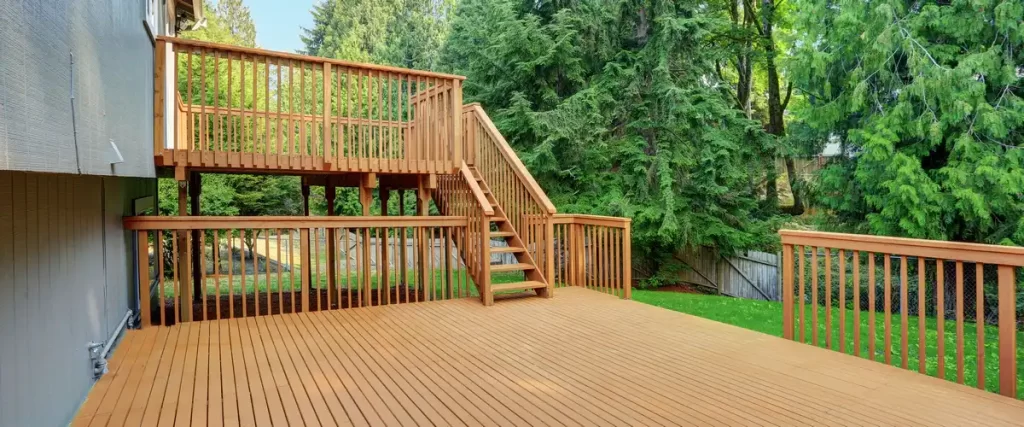
Most pole barn homeowners end up with decks that look like an afterthought. Someone bolts a few boards to the side of the building, throws some stairs on there, and calls it done. Six months later, the whole thing is wobbling, a year later it’s separating from the structure, and two years later you’re tearing it down and starting over.
The real issue is that pole barn homes and shouses don’t work like regular residential construction. Your building sits on posts instead of a foundation. The exterior might be metal siding, board and batten, or some combination. The door heights are different. Everything about how you’d normally attach an outdoor living space gets thrown out the window.
I’ve watched families spend good money on a new deck only to hate the finished product because it doesn’t match the building, or worse, it starts pulling away from the structure within months. That’s not a materials problem or a durability problem. That’s a design and installation problem.
What Actually Works for Shouses
Let’s talk about real life for a second. You’ve got your living quarters on one end, maybe your shop or office space on the other. Where does the deck go? Do you build two separate ones? One long one that connects everything? What about stairs? Do you need access from multiple sides?
The answer depends entirely on how you use your property. A family that entertains needs something different than someone running a business out of their shop. If you’re storing equipment, you might want ground-level access on one side. If you’ve got kids and dogs, safety railings become a priority.
Here’s what I’ve seen work well:
L-shaped designs that wrap around a corner give you outdoor space off the main living area while creating a separate entrance for a workspace. You get the benefits of a connected structure without everything feeling like one giant platform.
Split-level construction makes sense when your pole barn sits high off the ground. Instead of climbing 15 stairs every time you want to step outside, you break it up with a landing. That landing can become a spot for plants, a bench, whatever you want.
Some people add pergolas over part of the deck to create shade. Nebraska summers are brutal, and sitting in direct sun isn’t enjoyable past about 10 AM. A covered section extends how much you actually use the space.
Materials: What Holds Up and What Doesn’t
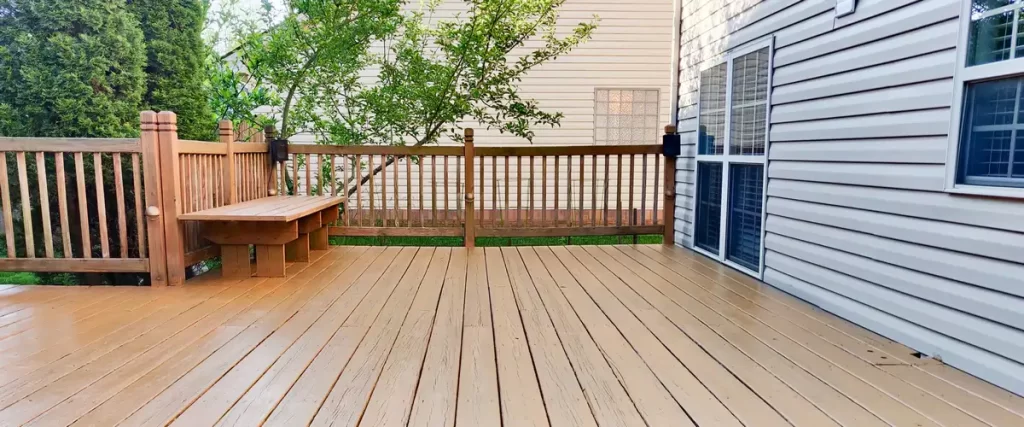
I’m going to be straight with you about composite decking versus pressure-treated wood because both have their place.
Composite costs more upfront. Always. But you’re not sealing it every year, you’re not replacing boards that warp, and you’re not dealing with splinters. For busy homeowners who want to relax instead of maintain, composite makes sense. The durability is real, and the range of colors means you can match it to your existing structure without much trouble.
Pressure-treated wood is cheaper initially and gives you that traditional look. If you like working with wood and don’t mind the maintenance, it’s a perfectly good choice. Just know what you’re signing up for. Nebraska weather is hard on wood. Wet springs, hot summers, cold winters. You’ll be putting in work to keep it looking decent.
Aluminum railings have gotten popular lately, especially for commercial pole barns, where you need something that can take a beating. They stand up to the weather better than anything else, though some people think they look too industrial for residential use.
Cedar is beautiful but expensive and still needs regular treatment. If aesthetics are your top priority and budget isn’t a concern, cedar brings a level of beauty that’s hard to beat.
The Technical Stuff That Actually Matters
Nebraska building codes don’t care that your pole barn is unique. You still need permits. The Nebraska Department of Labor oversees building standards, and your local county office handles the actual permitting. Skip this step, and you’re asking for headaches when you try to sell or if something goes wrong.
Attaching a deck to metal siding requires specific fasteners and techniques that prevent water intrusion. Wood pole structures need evaluation to make sure you’re not drilling into load-bearing posts or compromising the building’s integrity. This is where experienced professionals earn their keep, because getting it wrong means your deck pulls away or, worse, damages your building.
Drainage might sound boring, but it’s the difference between a deck that lasts decades and one that rots out in five years. Water needs to move away from your structure. Period. That means grading the ground correctly, potentially adding gutters if you don’t have them, and making sure water doesn’t pool under the deck.
| Design Element | What It Does | Why It Matters |
| Proper ledger attachment | Connects the deck to the building securely | Prevents separation and collapse |
| Adequate post depth | Supports weight and resists frost heave | Keeps deck level and stable |
| Appropriate joist spacing | Distributes load evenly | Prevents sagging and bouncing |
| Correct railing height | Meets code requirements | Safety for family and guests |
Custom Solutions for Weird Situations
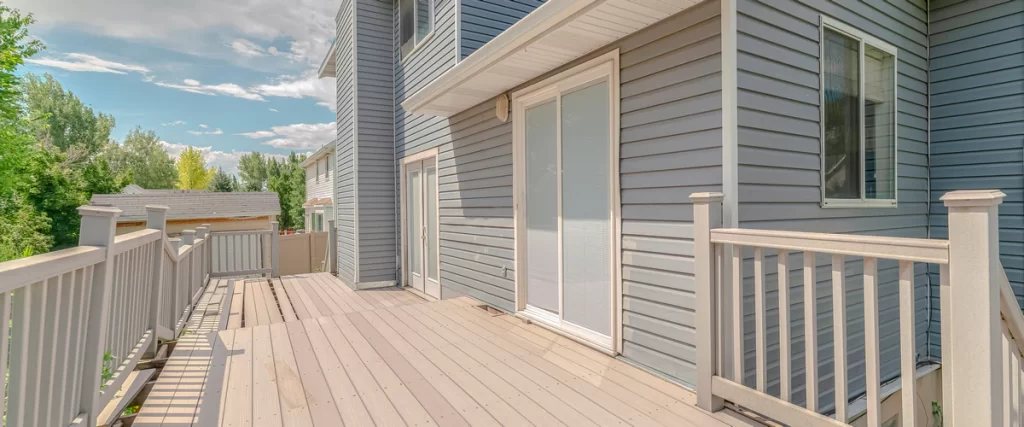
Every pole barn is different. Maybe yours has that big sliding door that’s 12 feet wide. Maybe you’ve got windows on one side but not the other. Maybe the previous owner built an old deck that’s now rotted out, and you need to work around existing footings.
Custom decks aren’t about being fancy. They’re about solving your specific problems with your specific building on your specific property. A cookie-cutter approach doesn’t work when the building itself is custom.
I’ve seen projects where someone needed stairs on three different sides for practical access. Another client wanted under-deck storage with doors that matched their shop entrance. One family needed a section of deck strong enough to park their ATV temporarily. These aren’t standard scenarios you’ll find in a deck-building manual.
The key is having a team that listens to how you actually use your space instead of just slapping boards together. When you explain that you need to move equipment in and out, or that you want to grill without smoke blowing into the house, or that you need space for a table that seats eight, that information shapes the entire design.
What Nobody Tells You Until It’s Too Late
Building too small is the most common mistake. You think a 10×12 deck sounds reasonable until you try to put furniture on it and realize you’ve got maybe three feet of walking space. If you’re investing in an outdoor living space, make it big enough to actually live in.
Ignoring how you’ll use it years from now is another trap. Right now you might not need under-deck storage, but what about when you accumulate more tools or equipment? Right now stairs on the south side might be fine, but will that still make sense if you add a driveway or parking area?
Cheap materials cost more in the long run. That’s not sales talk, it’s math. If you replace pressure-treated boards every 10-15 years versus installing composite that lasts 30 years with minimal upkeep, you’re spending more money on the “budget” option over time.
The view from your deck matters more than you think. If you’re staring at a utility shed or your neighbor’s storage containers, you won’t want to spend time out there. Think about what direction your deck faces and what you’ll be looking at when you’re sitting down to relax with your family.
Why DIY Sounds Better Than It Is
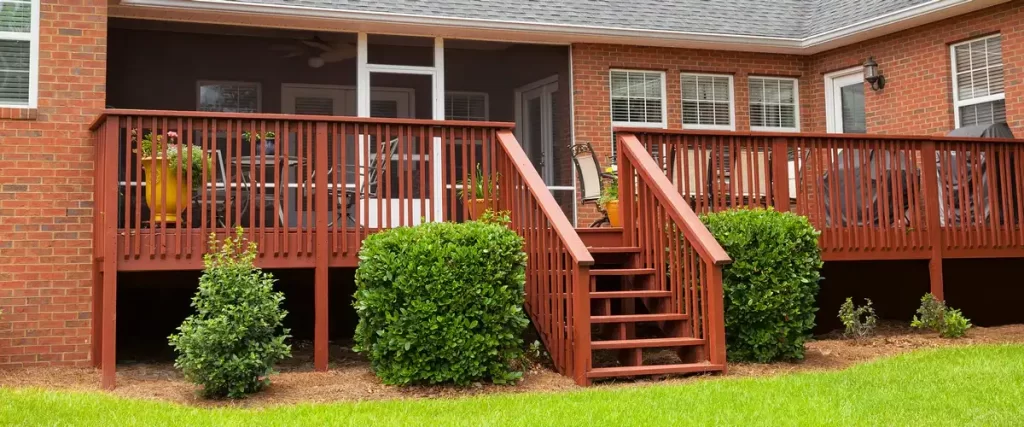
Look, I respect people who want to build things themselves. There’s satisfaction in creating something with your own hands. But deck construction on a pole barn home isn’t a weekend project you figure out as you go.
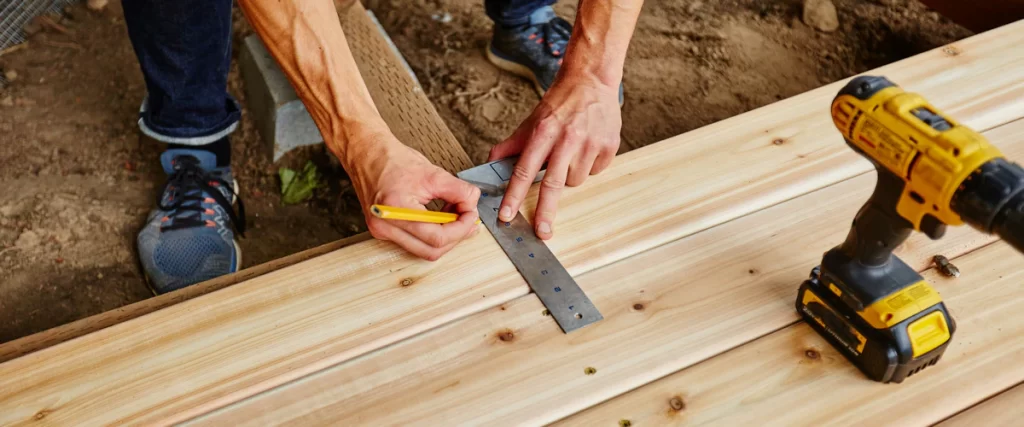
You need to understand load calculations so the structure doesn’t sag or bounce when people walk on it. You need to know proper joist spacing for whatever decking material you choose. You need the right fasteners for metal siding or techniques for attaching to wood posts without weakening them. You need to factor in drainage, comply with building codes, and probably get inspections at various stages.
Most DIY deck projects I’ve seen take 3-4 times longer than expected and still end up needing professional help to fix mistakes. By the time you factor in your time, renting tools, buying materials twice when you get measurements wrong, and potentially having to tear things out and redo them, the cost savings evaporate pretty fast.
FAQ: Real Questions from Real Homeowners
How long does it take to build a deck on a pole barn?
Depends on size and complexity, but most projects take 1-2 weeks from start to finish. The weather can delay things. A simple single-level deck goes faster than a multi-level design with custom features.
Can I match my deck to my building’s color scheme?
Absolutely. Composite comes in enough color options that matching is straightforward. Wood can be stained to coordinate. The goal is to make everything look like it was planned together from the beginning.
What if my pole barn sits really high off the ground?
Multi-level designs or extended stair systems solve that problem. You might need a landing platform partway down, which actually creates additional functional space. The added construction makes it more expensive but also more usable.
Do I need separate decks for living area and shop area?
Not necessarily. A wraparound or L-shaped design can connect both while keeping them visually distinct. It depends on how you want to use each space and whether you want them to feel separate or connected.
What’s the biggest mistake people make with shouse decks?
Treating them like standard residential decks. The attachment points are different, the building structure is different, the typical use cases are different. You need custom solutions, not template plans.
How do I know if my current deck is safe?
If it wobbles, if you see gaps between the deck and building, if boards are rotting or cracking, if railings feel loose, those are all signs of problems. A professional can assess whether repair makes sense or if starting fresh is the better call.
When Calling Someone Makes More Sense
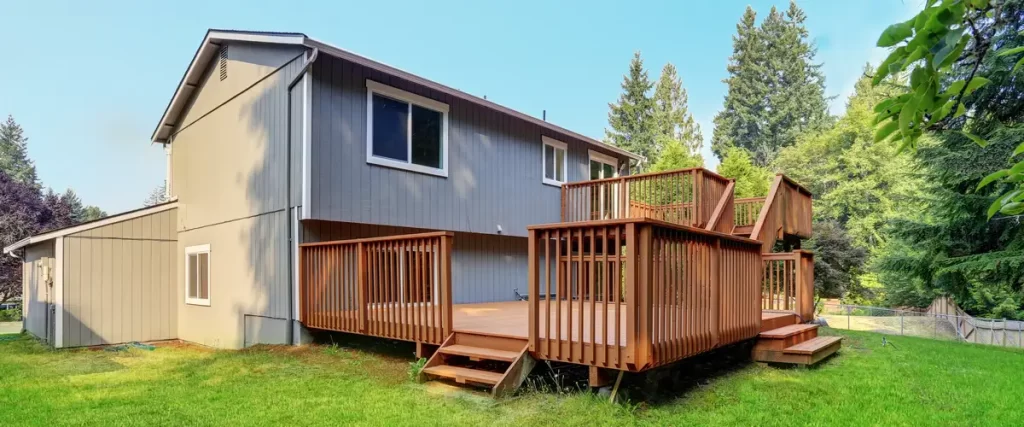
You’ve made it through all this information about materials, attachment methods, design considerations, permits, and everything else that goes into deck construction for pole barn homes. Maybe you’re feeling confident about tackling it yourself. Maybe you’re feeling overwhelmed.
Both reactions are valid.
Here’s the thing about quality and customer satisfaction: they come from experience, precision, and attention to detail across every aspect of a project. Building one deck teaches you what works. Building dozens teaches you what lasts. Building hundreds teaches you how to anticipate problems before they happen.
If you’re ready to transform your outdoor space from bare ground or an old deck that’s falling apart into something you’ll actually enjoy, deck building services that understand pole barn construction might save you a lot of frustration.
Call us at (402) 369-5724 or message us here and let’s talk about what you want. Maybe it’s a simple platform deck. Maybe it’s a complex multi-level design with pergolas, storage, and custom features. Either way, we can create something that works for how you actually live instead of fighting against your existing structure.
Life’s too short to spend your weekends fixing a deck that was never quite right in the first place. Sometimes letting someone else handle the details means you get to the enjoyment part faster.