
The weeks leading into the winter season give your deck its last stretch of mild weather before cold temperatures, rain, and snow arrive.
Many homeowners want their outdoor space to be ready for the winter elements, but overlook a few tasks that protect the deck surface. Some of these tasks take only a short time, yet skipping them creates issues that appear in spring as mold, water damage, or soft spots.
If you understand the most common mistakes, you can keep your deck in better shape throughout the year.
Below are the top 5 deck maintenance mistakes homeowners make before winter and what actually helps your deck stay strong until warmer weather returns.
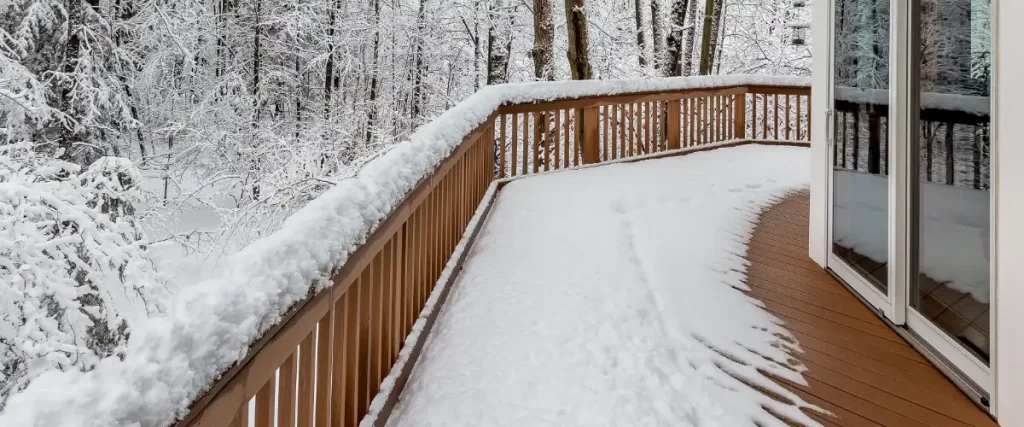
1. Forgetting a Detailed Cleaning Before the First Freeze
A deck collects dirt, leaves, and other debris throughout the summer and fall. When colder weather arrives, all of that grime gets trapped under snow accumulation.
The longer debris stays on the deck’s surface, the more moisture it holds. That leads to mildew, mold, and staining, and those stains can work their way into wood fibers if the deck is left uncleaned.
Many homeowners regularly sweep their decks during warm months but skip a deeper cleaning as winter approaches. A light sweep removes leaves, but deeper cleaning removes dirt that has settled into cracks.
A deck cleaner with oxygen bleach is often gentle and effective for wooden decks. Composite decking benefits from a mild detergent. Some people turn to a pressure washer, although too much pressure damages decking boards or strips the deck’s finish.
A simple routine helps:
- Remove debris from all corners and gaps.
- Rinse areas near railings that collect more grime.
- Test cleaners in an inconspicuous area before applying them to the entire deck.
Cleaning well before freezing temperatures ensures you are not locking dirt and moisture under layers of ice and snow.
2. Skipping Repairs That Should Happen Before Winter Months
Loose boards and loose screws do not fix themselves during winter. Snow loads make weak areas worse, and older decks often show signs of movement once moisture freezes between boards.
Wood rot also spreads more quickly when moisture remains trapped for long periods. If necessary repairs wait until spring, the damage usually takes longer to correct.
Inspecting the deck regularly reveals early warning signs. Walk the entire deck and feel for soft spots or cracks. Look for water damage where rain pools during storms. Railings often shift over time, and winter snow places extra pressure on them.
Some homeowners overlook these issues because the deck looks fine from a distance, but a close inspection reveals small problems that winter can turn into larger ones.
Repairs do not need to be complicated. Many people tighten a few fasteners or replace a single deck board. Still, it is helpful to check that the deck continues to follow building codes, especially if any past repairs were done quickly during the summer. Addressing small issues now protects the deck’s structural integrity later.
3. Applying Stain or Sealant Too Late in the Season
Deck staining needs time to dry. When temperatures drop or humidity rises, the stain no longer bonds well with the wood.
Many homeowners try to apply stain during a warm fall day without realizing that the temperature drops too fast in the evening. The result is a sealant that dries inconsistently. Winter moisture then seeps through the deck’s finish and reaches the wood.
Wooden decks rely heavily on a good seal before facing months of snow and freezing rain. If the stain isn’t fully cured, the deck absorbs more moisture through the winter months. This leads to rot, cracks, and peeling surfaces.
A stain or sealant works best when:
- Temperatures stay consistently warm for a full day and evening.
- The surface is completely dry, including small gaps between boards.
- Dirt is removed fully, since stain traps anything left on the surface.
If the weather is already cold or fluctuating, waiting until spring is better than applying the stain too late and losing the protective value altogether.
4. Leaving Furniture, Planters, and Covers in the Wrong Places
Furniture that sits in one spot all winter creates trapped moisture underneath it. Planters that rest directly on the deck surface leak water, soil, and stains. Covers that blow around in cold wind scratch the finish. These small issues add up and shorten the longevity of wood decks and composite decks.
During the cold months, many homeowners leave furniture exactly where it sits during summer. The problem appears in spring, when dark stains or uneven fading show up around those areas. Snow accumulation around furniture bases also places pressure on the deck surface and blocks water flow during melting.
A simple rearrangement helps your deck:
- Move furniture to one side or store it indoors when possible.
- Place planters on risers so air can flow underneath.
- Remove soaked fabric covers after a rain or snow event.
- Clear paths so melting water flows off the deck instead of gathering in one spot.
These small adjustments protect both wooden decks and composite decking from discoloration, cracking, and trapped moisture.
5. Using the Wrong Tools for Snow and Ice
Once winter arrives, snow removal becomes part of regular maintenance. Many homeowners use metal tools because they seem sturdy.
Unfortunately, metal shovels scrape the deck surface and create gouges that lead to bigger issues. Scratches on a wooden deck let water reach deeper layers. Scratches on composite decking become permanent marks.
A plastic shovel is far gentler. For light snow, a broom works well. A leaf blower also helps remove powdery snow without touching the deck surface. When ice forms, many people reach for rock salt. For wooden decks, rock salt dries out the surface and damages fibers. For composite decks, it leaves white residue that stains the material.
Gentler options include:
- Calcium chloride, which is easier on decking.
- Sand, which adds traction without a chemical reaction.
- Careful removal, avoiding any digging that gouges boards.
Treating the deck carefully during winter helps you maintain the deck surface and avoid repairs caused by unnecessary wear.
Why These Mistakes Matter
These common mistakes may seem small at first, but winter elements are persistent. Moisture sits on the surface longer, freezes, melts, and freezes again. If debris is still on the deck in early winter, moisture collects in those areas. If repairs are skipped, freezing water pushes the boards apart.
If the stain does not fully cure, water reaches the wood and leads to rot. These issues often go unnoticed under snow until spring, when the damage becomes visible.
Regular maintenance does more than protect the aesthetic appeal of your deck. It keeps your deck safer, prevents long-term tear, and helps you maintain the investment you made in your outdoor space.
A Few Ways to Protect Your Deck Before Winter
You can avoid many of the issues above with a simple routine. It does not need to feel overwhelming. Just a few habits help your deck handle the colder months.
Some helpful steps include:
- Inspect the entire deck once leaves start falling.
- Remove dirt and debris before temperatures drop.
- Check for necessary repairs and address them early.
- Test cleaners in smaller areas before applying them widely.
- Move furniture so moisture does not get trapped underneath it.
These actions prepare the deck for winter, keep your deck healthier, and reduce the amount of work needed in spring.

Preparing a Deck Takes Time, and Some Homeowners Prefer Help
Winter brings moisture, snow, and long stretches of cold that test every material on your deck. Wooden decks need more attention than composite decking, but both benefit from thoughtful maintenance.
If these tasks feel time-consuming or you would rather spend energy elsewhere, you are not alone. Deck Bros helps homeowners with repairs, upgrades, new deck building, and seasonal maintenance when the work becomes too much to handle.
If you want support getting your deck ready for winter or improving it when spring arrives, call us at (402) 369-5724 or message us here.