
Planning a new deck this year? Before you pick materials, set a budget, or start sketching out your design, there’s one thing that needs to happen first: a permit.
Most homeowners either don’t realize they need one, underestimate what the process involves, or find out the hard way that skipping it was a very expensive mistake.
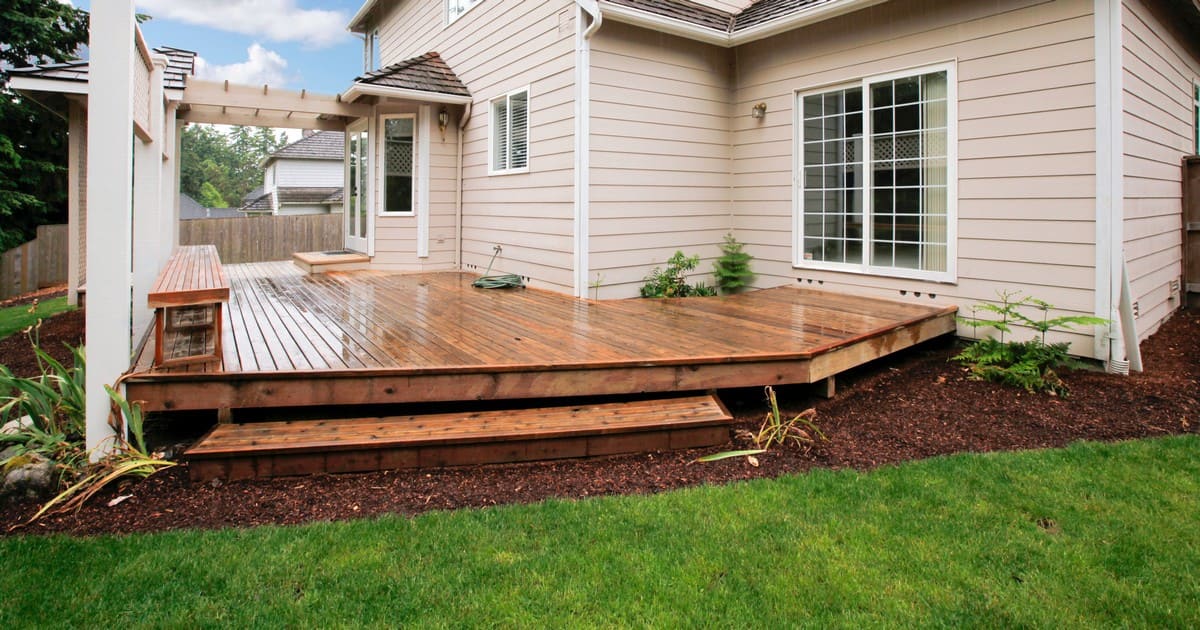
Do You Actually Need a Permit for Your Deck?
Almost certainly yes. The City of Omaha requires building permits before you start any construction work, and permit costs are quadrupled if you start a project without one.
The exception is small, freestanding structures. Low-lying island decks that aren’t attached to a structure, are smaller than 200 square feet, and sit under 30 inches above grade may not require a permit, though this also depends on local zoning regulations.
If your deck is attached to your house, elevated more than 30 inches, or exceeds that size threshold, you need a permit. Full stop.
What the City Actually Requires You to Submit
This is where a lot of homeowners get tripped up. It’s not just filling out a form. A site plan and structural drawings are required for all decks in Omaha. That means before anyone breaks ground, you need documents that show the city exactly what you’re building and where.
Specifically, your submission needs to address:
- A site plan showing where the deck sits on the property relative to the house, property lines, and any recorded easements
- Structural drawings covering footings, beams, joist sizing, railing details, and stair layout
- Compliance with setback requirements, which vary by zoning district and dictate how far the structure must sit from property lines
Your plans need to be clear and complete. Omaha’s building department reviews hundreds of applications, and reviewers can spot incomplete submissions immediately. Missing information means your application goes to the bottom of the pile while you gather what’s needed.
That review delay is a real issue if you’re trying to get a deck built before summer. Getting your documents right the first time matters more than most people realize when they’re excited to start a project.
The Specific Code Requirements That Affect Your Design
Nebraska follows the International Residential Code with local modifications layered on top, and those local requirements affect some of the most fundamental decisions you’ll make during the design process.
Here’s what the current rules look like for Omaha-area deck construction in 2026:
Footings
Footings must extend below the frost line, which is typically 42 inches in Nebraska. That’s a substantial dig, and it’s not optional. Nebraska winters push frost deep into the ground, and footings that don’t reach below that line will heave over time, compromising the entire structure above them.
Ledger Boards
Ledger boards require proper flashing and must be attached with approved fasteners. The ledger is the board that connects your deck to your house, and it’s the single most failure-prone connection point on any attached deck. The city reviews this closely because improperly installed ledgers are the leading cause of deck collapse.
Railings and Guardrails
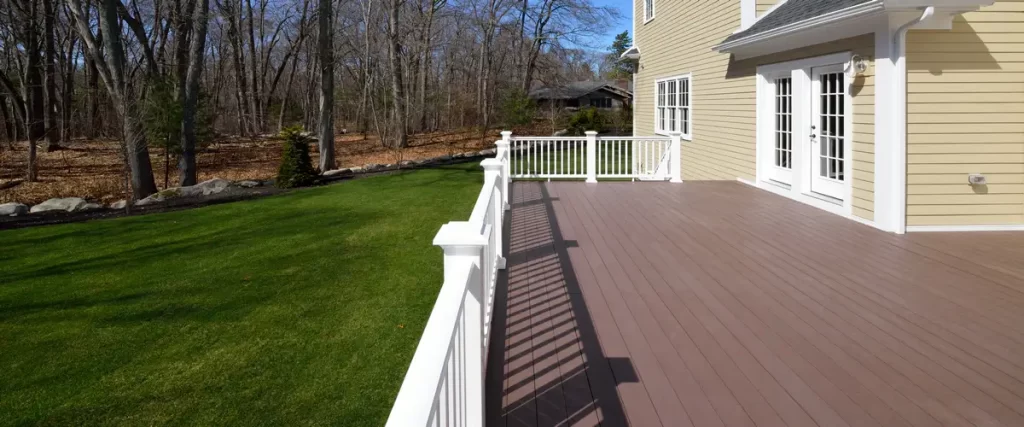
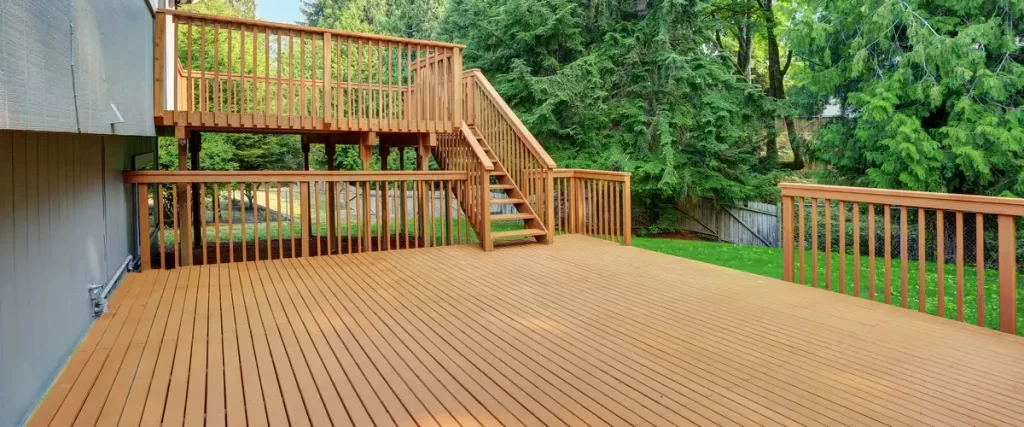
Guardrails are required for decks over 30 inches above grade, with a minimum height of 36 inches. Stairways must have handrails if there are four or more risers. Baluster spacing also matters here: gaps need to be narrow enough that a 4-inch sphere cannot pass through, which is a child safety requirement baked into code.
Stair Dimensions
Omaha’s stair requirements specify a minimum tread width of 10 inches, a maximum rise of 7¾ inches, and the maximum difference between any individual treads or risers is 3/8 of an inch. These dimensions exist because inconsistent stair geometry is one of the most common causes of falls on residential decks.
Property Lines, Setbacks, and Easements
Setback requirements in Omaha specify how far your deck must be from property lines, and exact distances vary by zoning district. Violating setbacks is one of the fastest ways to get your permit denied.
Corner lots and properties with utility easements add another layer of complexity. Utility easements might run through your yard, and building in those areas is usually prohibited.
Check your deed and plat for recorded easements before you choose your deck location, and consider a current survey if there’s any uncertainty about where your property lines actually fall.
Old surveys sometimes don’t reflect what’s actually on the ground if fences or landscaping have shifted the apparent boundary over the years.
This is one of the areas where working with an experienced contractor pays for itself before the first board gets cut. A professional who regularly pulls permits in Omaha already knows which zoning districts have tighter setbacks and what reviewers typically flag.
The Online Portal and How It Works
Omaha has moved toward digital permit applications in recent years. The online system lets you submit plans, pay fees, and track your application’s status without visiting city offices, and digital submissions often process faster because reviewers can access them immediately.
The City of Omaha’s Permits and Inspections portal is where applications are submitted. Upload your documents in the formats the city specifies, generally PDF, and make sure your file sizes are manageable while keeping all drawings legible.
One thing people don’t realize until they’re in the middle of it: the portal shows you where your application sits in the review queue in real time.
You can see when reviewers open your files and what comments they’ve added, which means you can respond to questions quickly rather than losing a week waiting on a phone call.

What Happens If You Skip the Permit
Beyond the quadrupled permit fees already mentioned, building without a permit creates problems that follow the property, not just the current owner.
If an inspector finds unpermitted work, you may be required to demolish the structure and rebuild it with proper permits.
A lot of the materials from the first build won’t be reusable, so you’re paying for materials twice. Your homeowner’s insurance may also deny claims related to an unpermitted structure, which is a particularly uncomfortable situation if the deck fails and someone is injured.
And if you ever go to sell the home, unpermitted work shows up during inspection and either kills the deal or gets negotiated into a significant price reduction.
The permit process exists to protect the people who will actually spend time on that deck, whether that’s your family, your guests, or the next owners of the home. It’s not bureaucratic friction for its own sake.
Omaha vs. Lincoln: Are the Rules Different?
Broadly similar, but not identical. Nebraska permits local counties and cities to adopt and enforce their own building codes as long as they conform generally with state requirements, and the City of Omaha elects to enforce its own local code.
Lincoln operates under its own Building and Safety Department with its own set of deck builder guidelines, which cover specifics like joist spacing, beam sizing, and post anchoring. If you’re building in Lincoln rather than Omaha, the underlying IRC framework is the same but the local amendments and fee structures differ, so it’s worth checking with Lincoln’s building department directly before you submit.
FAQ
How long does permit review typically take in Omaha? Review times vary based on the department’s current workload and how complete your submission is. Complete, well-organized applications move faster. Incomplete ones sit until you provide what’s missing.
Can I apply for the permit myself or does my contractor do it? Permits are the responsibility of the property owner but may be applied for by a contractor or other representative. Most experienced deck contractors handle the permit application as part of their service, which tends to result in faster approvals because they know what reviewers expect to see.
What if my deck is just a small platform near the ground? If it’s freestanding, under 200 square feet, and under 30 inches above grade, it may fall outside the permit requirement. Confirm with the city before assuming, because the “may not require” language in code leaves room for local interpretation.
Will a contractor build my deck without a permit if I ask? Any licensed and insured contractor operating legitimately will not. If a contractor is willing to build without a permit to save time or money, that tells you something important about how they approach their work overall.
Where do I go to apply in person if I prefer not to use the online portal? Building permits are issued at the Omaha Civic Center at 1819 Farnam Street, Room 1110.
Let Someone Else Handle the Paperwork
Reading through all of this gives you a solid picture of what’s involved. Actually preparing a compliant permit application, drawing plans that meet every local requirement, verifying setbacks, calculating footing depths, and navigating the review queue is a different thing entirely. It takes time and familiarity with what Omaha reviewers specifically expect to see.
We handle the entire permit process as part of every deck construction project. They’re licensed, bonded, and insured, and they’ve pulled enough permits in this city to know how to put together a submission that moves through review cleanly. For a closer look at how they approach new deck projects from initial design through final inspection, check out the our deck building page.
When you’re ready to get started, call us at (402) 600-0810 or message us here.