
Deck Installation in Fremont, NE
Service area: Fremont, NE (Dodge County) | Last updated: April 2026 | Written by: Luan Nguyen, Owner, Deck Bros
Licensed and Insured | BBB Accredited | Google Guaranteed | 800+ Decks Built | Omaha License #2000717
Written by Luan Nguyen, Owner and Lead Builder, Deck Bros
I’ve been building and installing decks across Nebraska since 2020. Fremont homeowners call us regularly, and the questions they ask before signing a contract are almost always the same. This page answers those questions directly.
The most common mistake homeowners make before a deck installation is choosing a material before understanding what that choice actually means over a 10 or 20-year horizon. Pressure-treated pine looks like a good deal at $8,000 installed. Composite looks expensive at $18,000. But those numbers only tell part of the story, and the part they leave out is what determines whether you are happy with the decision five years later.
I’m Luan, and I own Deck Bros. We install decks in Fremont and across the Omaha Metro. Before any of that, I want to give you a plain-language breakdown of the material decision, because getting that right is worth more than any single thing else in the process.
Ready to talk specifics? Call (402) 600-0810 or request a free quote here. We schedule on-site visits in Fremont within the week.
- 800+ decks installed
- In-house crews
- Authorized TimberTech, Trex, and Fiberon dealer
- 5-year workmanship warranty
- Fremont permits handled
- Itemized written quotes
The Material Decision: What Nobody Explains Clearly
Decking Surface Materials
Pressure-treated pine
The lowest upfront cost. A 12×16 ft ground-level deck installed in pressure-treated pine runs roughly $8,000 to $11,000. The tradeoff is maintenance: pressure-treated pine needs cleaning, sealing or staining every 2 to 3 years to stay in good condition. Skip that cycle and the boards start cupping, cracking, and greying within 4 to 5 years. Nebraska’s freeze-thaw seasons accelerate that timeline compared to milder climates.
If you plan to sell your home in the next 3 to 5 years and want to maximize return without a large upfront investment, pressure-treated pine is a defensible choice. If you plan to stay long-term and do not want the maintenance obligation, it is the wrong starting point regardless of the lower price.
Cedar
Cedar sits above pine on both cost and quality. Materials run $25 to $30 per square foot, with installation in a similar range to pine. The natural oils in cedar give it better resistance to rot and insects than pressure-treated lumber, and it holds stain better over time. Cedar still requires maintenance every 2 to 3 years, but the boards hold up better between cycles and the visual result when freshly stained is hard to match.
A well-maintained cedar deck can last 25 to 30 years. An unmaintained one deteriorates faster than most homeowners expect.
Composite (TimberTech, Trex, Fiberon)
Composite decking runs $40 to $50 per square foot installed, depending on the product line and profile. The cost gap relative to wood narrows considerably over a 10-year period when you account for zero staining, zero sealing, and the near-elimination of board replacement costs.
TimberTech’s AZEK line and Trex Transcend are the two products we install most frequently in Fremont. Both carry 25-year fade and stain warranties. The surface texture and color options have improved significantly in the last five years. Modern composite boards no longer look like a substitute for wood. At this point, most homeowners choose them on their own merits rather than as a workaround.
The honest limitation of composite: upfront cost, and color matching. If you need to replace a board in year 12, matching the original color lot is sometimes difficult because manufacturers update their palettes. We source replacements as closely as possible and are straightforward when an exact match is not achievable.
Hardwood (ipe, tigerwood, cumaru, garapa)
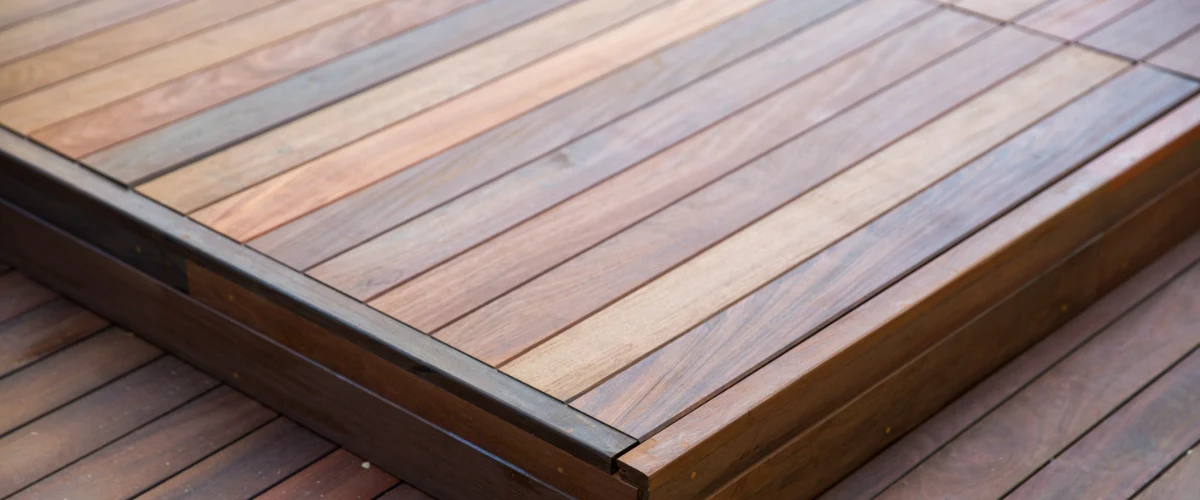
Tropical hardwoods are the most durable natural wood decking option available and the most expensive. Ipe runs $64 to $68 per square foot installed. Properly maintained, it lasts 40 to 75 years. It is extremely dense, naturally resistant to rot and insects, and does not soften the way pine or cedar does underfoot.
The maintenance requirement for ipe is applying a UV-stabilizing hardwood oil once a year. Skip it and the boards grey, though they remain structurally sound. Some homeowners intentionally let ipe grey to a silver tone.
Hardwoods are worth the cost for homeowners who want a natural wood aesthetic, plan to stay in the home long-term, and are willing to do annual maintenance. They are not the right call for someone primarily looking to manage upfront spend.
Framing Materials
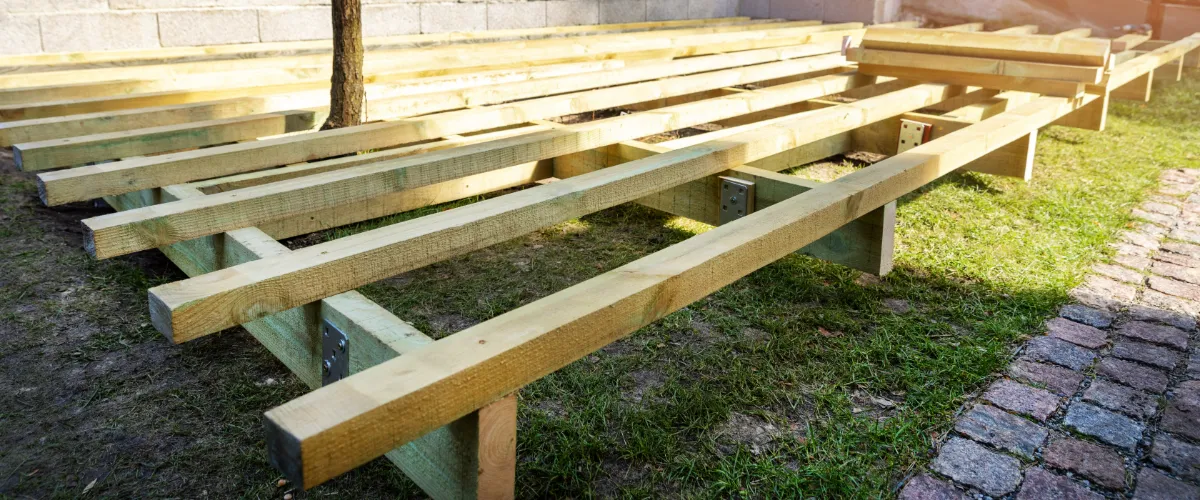
Most homeowners focus on the decking surface and give little thought to what is underneath it. The frame is what determines whether the deck is structurally sound for its full lifespan.
We frame with Grade-1 pressure-treated lumber at minimum. For composite deck installations, we upgrade to heavier-duty framing at the ledger connection points and use stainless steel or hot-dipped galvanized hardware throughout. Standard zinc-plated hardware corrodes within a few years in contact with pressure-treated lumber, which compromises the connections that matter most.
For elevated or second-story decks, we use engineered beam sizing appropriate to the span rather than defaulting to the minimum code requirement. Minimum-code framing is legal. It is not always the right answer for a structure you plan to use for 20 years.
Railing Systems
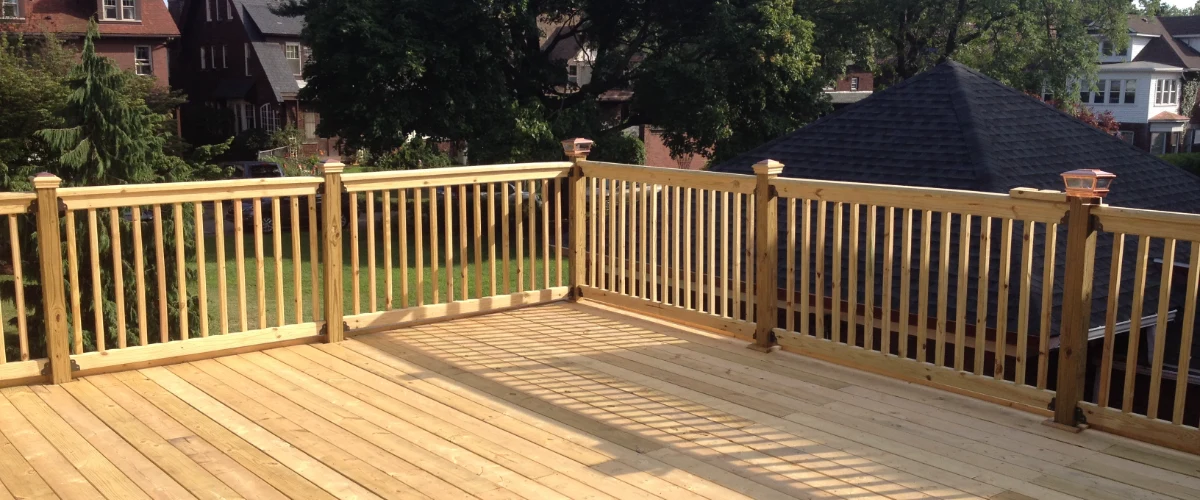
Wood railings are the lowest upfront cost but require the same maintenance cycle as the decking surface. When wood railings are combined with composite decking, the railing ends up being the high-maintenance component that undermines the low-maintenance surface choice.
Aluminum railings (Westbury) are what we install most frequently. Powder-coated aluminum does not rust, does not need painting, and holds up to Nebraska weather without issue. The visual result complements both wood and composite decking. Cost runs approximately $80 to $120 per linear foot installed.
Cable railing suits contemporary home aesthetics and preserves sightlines from the deck. Installation cost is higher than aluminum, and cable tension requires occasional adjustment.
Glass panel railing is the premium option for unobstructed views, typically on elevated decks with a view worth preserving. Cost and complexity are highest in this category.
Deck Installation Cost in Fremont, NE: 2025-2026 Pricing
These figures reflect installed costs in Dodge County including materials, labor, permit fees, and cleanup.
| Configuration | Typical Size | Installed Cost Range | Notes |
|---|---|---|---|
| Ground-level composite (TimberTech/Trex) | 12x12 ft | $14,000-$17,000 | Stairs and basic aluminum railing |
| Ground-level composite | 16x20 ft | $22,000-$28,000 | Aluminum railing, fascia wrap |
| Raised composite deck | 20x12 ft | $26,000-$33,000 | Deeper footings, 36" railing required |
| Ground-level pressure-treated pine | 12x12 ft | $8,000-$11,000 | Requires maintenance every 2-3 years |
| Ground-level cedar | 12x12 ft | $12,000-$16,000 | Requires maintenance every 2-3 years |
| Deck resurfacing only (composite over sound frame) | 200-400 sq ft | $8,000-$16,000 | Assumes existing frame passes inspection |
Real project example: A Fremont homeowner with a 24×12 ft existing wood frame in sound condition wanted composite decking installed over it. We inspected the frame, sistered two compromised joists, installed TimberTech AZEK boards in Weathered Teak, and added a Westbury aluminum railing system. Total: $18,000. Completed in two days. The homeowner’s previous deck had required staining every other year for the prior decade.
Deck Resurfacing vs. Full Installation: Which One Applies to You
- Full installation means building a deck from the ground up. New footings, new posts, new beams and joists, new decking, new railings. This is the right scope when there is no existing deck, or when the existing frame has failed.
- Deck resurfacing means removing the existing decking boards and railing while leaving the frame in place, then installing new decking and railing over the existing structure. This costs significantly less than a full installation and is the right scope when the frame is structurally sound.
The critical step before committing to resurfacing is a frame inspection. We get underneath every deck before quoting a resurfacing job. If the frame has compromised joists, a failing ledger connection, or post rot at grade, resurfacing on top of it produces a short-lived result and a future repair bill that exceeds what a full replacement would have cost.
We will not quote a resurfacing job without inspecting the frame first. If the frame is not sound, we will tell you, explain what it would take to make it sound, and let you decide how to proceed.
Fremont-Specific Considerations
- Permits: Deck installation in Fremont falls under the City of Fremont's building permit requirements. Fremont has its own building department with its own application process, setback requirements, and inspection schedule. We handle permit applications on every Fremont project. The typical turnaround for a standard residential deck permit in Fremont is 1 to 2 weeks.
- Distance: Deck Bros is based in Omaha, approximately 35 miles from Fremont. We serve Fremont regularly and the distance does not affect our timeline, our pricing, or our availability. We schedule Fremont projects the same way we schedule Omaha Metro projects. Travis Thomas, a Fremont homeowner who hired us, noted in his review that we took the job without his distance from Omaha being an issue. We have built that approach into how we operate.
- Climate: Fremont sits in the Platte River valley, which means humidity levels are higher than in parts of the Omaha Metro further from the river. That moisture exposure is an argument for composite decking over wood for Fremont homeowners who want to minimize long-term maintenance, particularly on north-facing or shaded decks where wood dries more slowly between wet periods.
How the Installation Process Works

1
Assessment
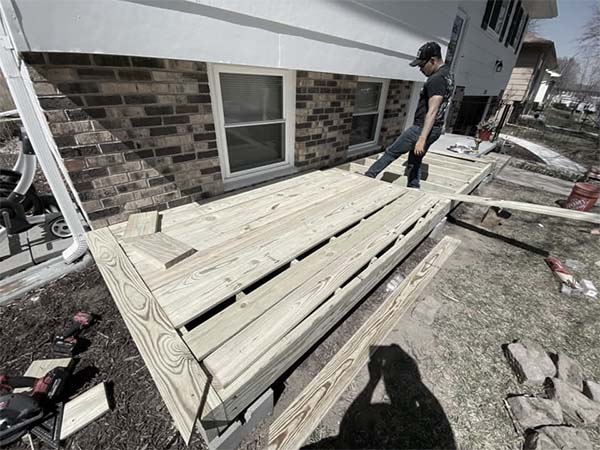
We visit your property, measure the space, and assess site conditions. For resurfacing projects, we inspect the existing frame. You receive a written, itemized quote that breaks out materials, labor, permit fees, and warranty. On-site visits take 30 to 45 minutes with no obligation.
2
Installation
3
Walkthrough
What Fremont Homeowners Say
T
Travis Thomas
They did a excellent job and the crew was professional.
I live 2 hours from Omaha and they took the job without that being an issue. Our deck turned out beautiful. We have the best looking deck in town. I am so glad that we chose Deck Bros.
If you want quality go with Deck Bros! It will the best choice you make.
E
Eileen B.
Can’t say enough great things about Deck Bros!
From the initial contact to the completion of my deck, Luan was always available and super responsive. He has a fantastic crew as well.
Deck Bros was hands down the most competitive with pricing. I couldn’t be happier with how my deck turned out.
Our Recent Deck Installations in Fremont
Why Homeowners in Fremont Work With Deck Bros
- Material knowledge that goes beyond the brochure. We work with TimberTech, Trex, Fiberon, cedar, ipe, and pressure-treated lumber on a regular basis. We can tell you from direct installation experience how each product performs in Nebraska's climate, not from a manufacturer spec sheet.
- Frame inspection before every resurfacing quote. We will not price a resurfacing job without verifying the structure underneath supports it. This protects you from spending money on a surface install that fails within a few years because the frame was not addressed.
- In-house crews. Your installation is carried out by Deck Bros employees, not subcontractors. The same people who build our Omaha projects build our Fremont projects.
- Itemized written quotes. Every line item is accounted for before you sign anything. Materials, labor, permit fees, and warranty terms are all spelled out separately.
- 5-year workmanship warranty. Our labor is backed for 5 years. Manufacturer warranties on TimberTech and Trex composite products run 25 years on fade and stain.
- Permits on every project. We handle the City of Fremont permit application and inspection coordination on every installation, without exception.
Frequently Asked Questions
Deck building refers to constructing a deck from the ground up: footings, posts, beams, joists, decking, and railing. Deck installation typically refers to installing new decking boards and railing over an existing structure. Both are services we provide in Fremont.
Yes. We serve Fremont regularly and schedule projects there on the same basis as Omaha Metro work. Distance does not affect our pricing or timeline for Fremont projects.
Get a Free, On-Site Quote for Deck Installation in Fremont

We will measure your space, assess any existing structure, walk you through material options with physical samples, and give you an accurate written quote specific to your project.
(402) 600-0810 | Mon-Fri, 9am-5pm Request a free quote online at deckbros.com/contact-us | info@deckbros.com
We serve Fremont and surrounding Dodge County communities, as well as the full Omaha Metro including Papillion, La Vista, Bellevue, Gretna, and Chalco.
Fremont is the county seat of Dodge County, Nebraska, located approximately 35 miles northwest of Omaha. The city sits in the Platte River valley and falls within the 68025 and 68026 zip codes. Residential deck installations in Fremont require a building permit from the City of Fremont’s Community Development Department. Permit requirements cover new decks, replacement decks, and structural modifications to existing decks. Setback requirements, footing depth specifications, and railing height minimums are enforced through the permit and inspection process. Deck Bros handles permit applications and inspection coordination for all Fremont projects as standard practice.