
Omaha winters arrive with freezing temperatures, high winds, and long stretches of snow accumulation. A deck in this climate faces more pressure than many homeowners expect. Snow and ice sit on the surface for weeks, melt during brief warm-ups, and freeze again overnight.
That cycle pushes moisture into wood fibers, tests the durability of composite decking, and exposes weak spots in railings and gutters.
If the deck is part of your outdoor living space, you probably want it to stay safe and strong through every winter month. The way winter weather interacts with decking materials shapes how well that can happen.

Why Omaha Winters Challenge Deck Boards
The combination of heavy snow, moisture, and repeated freeze-thaw cycles is a common problem for both wooden decks and composite decks.
Snow melts during daytime warmth, settles into small gaps, then freezes at night. This creates expansion that stresses boards. The thin layer of ice that forms can be tough on properly sealed wood and aging decking boards alike.
Wood decks respond differently from composite decking. Wood moves with temperature changes. Composite decking handles moisture better but feels the strain of cold weather in other ways. If you understand how each material behaves in winter, you can make better choices for winter deck care.
How Moisture Affects Wood Decking
Wood holds moisture. When snow and ice stay on the surface, the moisture slowly sinks in. Over time, moisture retention leads to rot, cracking, and loose boards. A properly maintained deck with a high-quality sealant holds up better, but even then, the long winter season creates wear.
Several things happen during freezing temperatures:
- Expansion in the wood fibers causes boards to warp or cup.
- Moisture damage appears as darkening, mold growth, or soft spots.
- Surface scratches from a metal shovel or ice melt products give water more places to settle.
A wood deck benefits from a protective barrier. If the seal wears thin, the surface absorbs more water. That creates more winter damage, especially on older boards.
Snow and Ice on Composite Decking
Composite decks resist moisture better than wood. They do not absorb water the same way, so cracking and rot are less common.
Still, snow and ice can affect them. The surface becomes slick, and scratches from improper tools become more visible. Cold weather makes composite decking slightly more brittle, so rough snow removal can cause further damage.
Ice melt becomes a concern, too. Some harsh chemicals change the color of composite surfaces. Products made with calcium chloride tend to be safer for many composite materials, while rock salt and sodium chloride leave marks.
What Happens When Snow Accumulates
Snow accumulation creates weight. Heavy snow presses on decking boards and railings. A deck that is properly installed with strong structural integrity handles normal loads well, but older decks feel stress when the snow piles up.
As snow melts and refreezes, water slips into small gaps where boards meet. That creates:
- Gaps are widening, especially on wooden decks.
- Surface cracking, when ice forms under a thin layer of snow.
- Frozen other debris, like leaves or twigs, which hold moisture against the surface.
Leaving snow untouched throughout the winter months increases the amount of moisture sitting on the boards. If you remove snow gently, you protect the surface and prevent moisture damage.
Safe Ways to Remove Snow and Ice
The tools you choose matter. A metal shovel scratches wood and composite surfaces. Scratches weaken the protective barrier and invite moisture.
A better choice is a plastic shovel. It glides across the surface with less scraping. Many homeowners also keep a broom nearby. A broom works well for light snow, especially early in the season. For fluffy snow, a leaf blower helps clear the surface without contact at all.
There are a few helpful approaches:
- Plastic shovel for moderate snow.
- Broom for a thin layer of snow.
- Leaf blower when the snow is light and dry.
- Rinse the surface during mild winter days to remove ice melt residue.
- Remove debris before storms, since leaves trap moisture.
Ice is trickier. Chipping at ice with a shovel or tool damages the boards. If you must remove ice, choose ice melt products that match your decking material.
Calcium chloride is usually gentle on both wooden and composite decks. Sand adds traction without a chemical reaction.
Harsh Chemicals and Their Impact
Rock salt and sodium chloride break down the fibers on wooden decks. On composite decks, they can create stains that last until spring. If you use ice melt often, consider how it can affect railings, patio furniture, and nearby plants.
Some homeowners spread too much ice melt at once. A large amount melts the ice quickly but leaves more residue. That residue affects the surface finish and encourages moisture retention. A light application works better and is safer.
Why Regular Winter Deck Care Matters
A winter deck needs attention even when you are not using it as a gathering space. Moisture damage builds slowly. If weak spots form during winter, they reveal themselves in spring when snow melts and temperatures rise.
A few minutes of attention help protect your deck in the long run:
- Check for loose boards after storms.
- Clear gutters so melting snow flows away from the surface.
- Brush off snow before it becomes compacted.
- Look for areas where water pools, since small dips collect ice.
The condition of the deck in winter shapes how well it performs during rain in spring or dry heat in summer.
How to Prevent Damage Before Winter Hits
Right preparation begins before the first storm. Wooden decks benefit from a fresh stain or seal. A high-quality sealant prevents moisture from soaking into the boards. Composite decks need less preparation but still benefit from a clean surface, so the winter weather does not trap dirt.
Homeowners often take a few simple steps:
- Move patio furniture to reduce pressure points under heavy snow.
- Remove other debris from corners and railings.
- Store items that collect moisture, such as outdoor rugs.
- Inspect the deck for weak spots so winter stress does not make them worse.
A properly maintained deck handles even harsh weather much better than a neglected surface.
When Spring Arrives
When the snow melts and the deck finally dries, the surface tells the story of the winter months. You may see cracking, stains from ice melts, or areas that feel soft underfoot on wooden decks. Composite decks may show color changes or scratches.
A gentle rinse with water removes leftover residue. Some homeowners apply a fresh seal or stain once temperatures warm up. Others prefer updating part of the deck or replacing boards that absorbed too much moisture.
Choosing the Right Decking Materials for Omaha Winters
Wood offers a warm, classic feel. Composite decking offers low maintenance and fewer issues with moisture. Each material handles winter weather differently. If your deck is aging, you may consider replacing parts of it with newer materials that withstand Omaha winters more reliably.
Decking material choice affects:
- How quickly moisture enters the boards.
- How well the surface resists freezing temperatures.
- How long the boards last under winter stress.
Every deck needs some level of care. Even the strongest composite boards benefit from thoughtful snow and ice management.
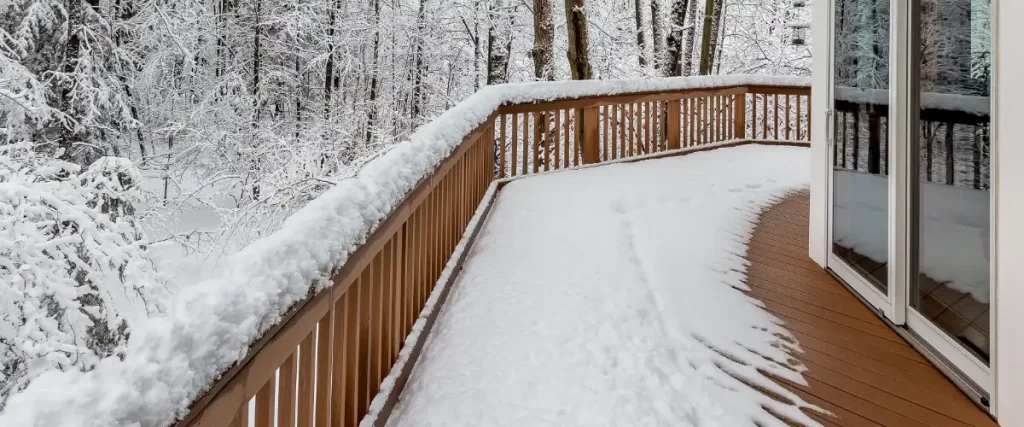
A Winter Deck Can Stay Strong With the Right Care
Winter weather in Omaha challenges every deck surface. Snow and ice interact with wood and composite decking in different ways, but both need respectful care to stay safe and inviting.
Small actions, such as choosing the right shovel, applying gentle ice melt products, and removing snow before it piles up, protect your deck and help prevent damage caused by months of moisture and cold.
Still, not every homeowner wants to spend time managing winter deck care or checking for damage once spring arrives. If you would rather have support with repairs, upgrades, or even new deck building when the weather warms up, the team at Deck Bros can help. For guidance or service, call us at (402) 369-5724 or message us here.