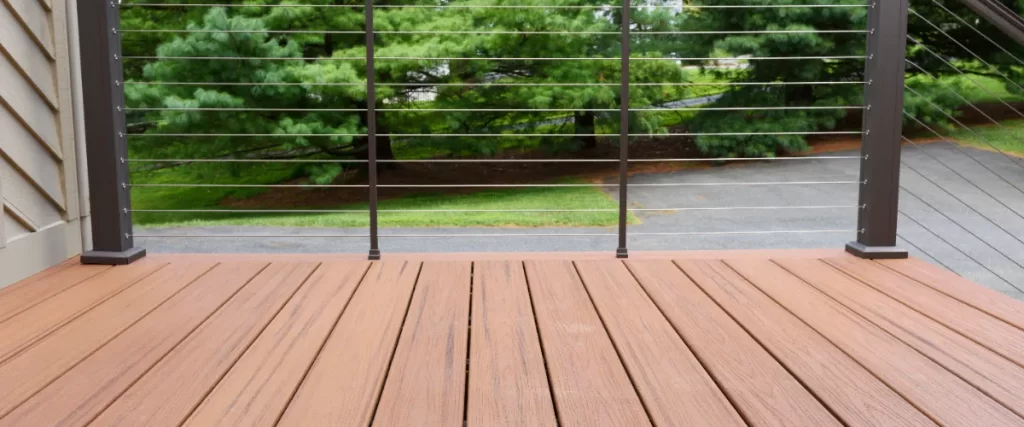
Both brands are good and that’s also why picking between them gets frustrating, because the marketing on both sides sounds identical and the real differences live in the details nobody puts on a sample board.

At a Glance
Category | TimberTech | Trex |
Entry-level tier | Prime / Prime+ | Enhance |
Top tier | Advanced PVC (Vintage, Landmark, Harvest) | Signature |
Longest warranty | Lifetime, residential (Advanced PVC) | 50 years (Transcend, Lineage, Signature, Refuge) |
Coolest underfoot | Advanced PVC, up to 30° cooler than composite | Transcend Lineage, up to 35°F less heat buildup |
Moisture resistance | Best on Advanced PVC, wood-free core, 4-sided cap | Good, wood-fiber composite, 3-sided cap vents from below |
Water contact | No submersion rating published | Approved for submersion and dock use |
Scratch resistance | Strong on Advanced PVC, composite trails Trex slightly | Signature and Transcend rated highest |
Material cost | $9-$16/sq ft depending on collection | $5-$12/sq ft depending on line |
Local availability | Generally in stock | Higher tiers often special-order |
Current Product Tiers
TimberTech
TimberTech manufactures decking materials within two distinct categories, composite and advanced PVC.
Composite boards feature a wood-fiber core encased in a protective polymer shell, while advanced PVC formulations contain no wood content.
Composite Collections:
- Prime and Prime+: entry-level, solid and multi-tonal colors
- Premier: mid-tier, regional availability varies
- Terrain: traditional wood-look, monochromatic and natural colors
- Reserve: rustic, reclaimed-wood look
- Legacy: top tier, hand-scraped artisanal finish

Advanced PVC Collections
Advanced PVC lines occupy the premium price tier and include four distinct collections:
- Harvest and Harvest+: Options featuring a stained-wood appearance.
- Landmark: Boards styled with a traditional hardwood-flooring feel and a Class A fire rating.
- Vintage: Options replicating exotic hardwoods such as ipe and mahogany.
- Solstice: The remaining line rounding out the PVC family.

Trex
Trex keeps things simpler with six lines running from Enhance at the entry point up to Signature at the top.
Tier | Line | What it’s for |
Good | Enhance | Step up from pressure-treated lumber |
Better | Select | Curated colors, budget-friendly |
Best | Transcend | Deep grain, scuff and scratch resistant |
Best | Transcend Lineage | Same, plus heat-mitigating technology |
Luxury | Signature | Photorealistic grain, highest scratch resistance |
PVC | Refuge | Ignition-resistant, built for fire zones |
Capping: three-sided vs. four-sided
Here’s a construction difference that rarely comes up in a showroom but shows up years later.
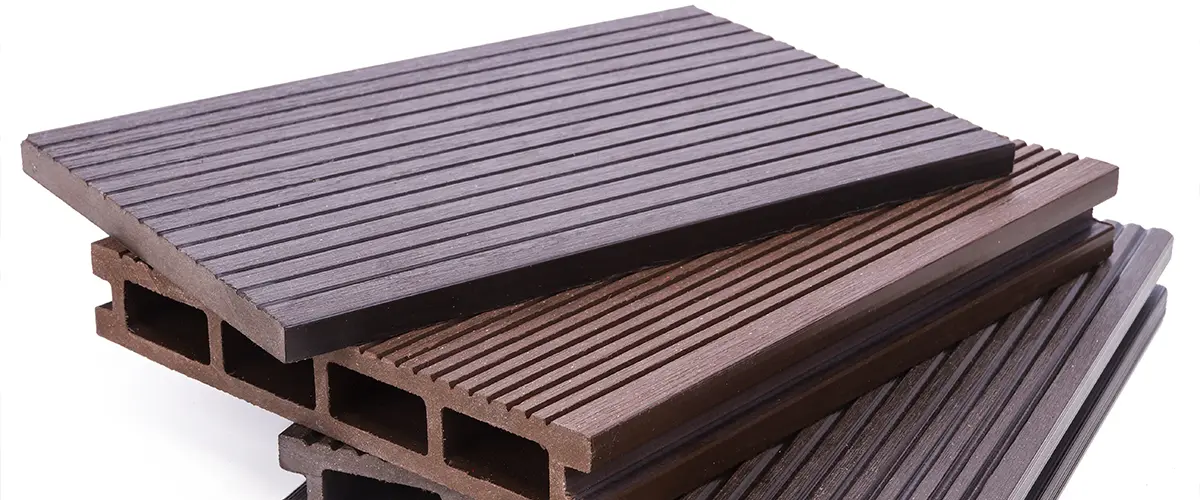
Most current TimberTech composite lines wrap the board on all four sides, though it varies by collection, sealing the wood-fiber core off from moisture on every face including the underside.
Trex caps the top and edges and leaves the underside open, so the board can vent moisture downward.
Both approaches work. On a standard elevated deck with airflow underneath, which covers the majority of builds, the open underside does its job fine.
The sealed four-sided board earns its keep on low-clearance, shaded, or poorly ventilated installs where that airflow never really happens, and TimberTech’s wood-free PVC sidesteps the question entirely since there’s no wood core to protect in the first place.

Material Cost and Installed Price
Neither company publishes a firm per-square-foot number, and for good reason. Pricing swings with your region, your dealer, and how complicated the build is. Here’s what these price out at on our jobs:
- Trex Select and Enhance: $5 to $9 per square foot for materials
- Trex Transcend: $10 to $12 per square foot
- TimberTech composite: slightly above Trex at comparable tiers, around $15 to $16 per square foot on a mid-range color
- Trex Select and Enhance: $5 to $9 per square foot for materials
- Trex Transcend: $10 to $12 per square foot
- TimberTech composite: slightly above Trex at comparable tiers, around $15 to $16 per square foot on a mid-range color
Installed, a TimberTech deck generally starts near $70 per square foot and can pass $120 once you add upgraded railing and a custom layout.
The part worth sitting with is that boards are only a fraction of what you pay. Framing, railing, hardware, and labor carry the rest, which is exactly why two quotes naming the same brand can land thousands of dollars apart.
What This Looks Like on Real Omaha Jobs
Numbers in isolation are hard to judge, so here are three of ours:
- 24 by 12 replacement, Omaha metro. Quoted at $18,000, decking itself at $8,760.
- 12 by 24 wood-to-composite conversion. Quoted at $38,000, with the composite the biggest single line at $14,500.
- Large elevated deck. Quoted at $65,500, and the railing alone came to $22,500.
Notice how often railing is the expensive part. On an elevated deck it can outrun the decking entirely, which is why a quote that doesn’t separate the two is nearly impossible to compare against anything.
Every build carries our five-year workmanship warranty, and most finish in about three days.

Warranty by Collection
Brand | Collection | Product warranty |
TimberTech Composite | Legacy, Reserve, Terrain | 30 years, prorated (10 yrs commercial) |
TimberTech Composite | Prime, Prime+, Premier | 25 years, prorated (10 yrs commercial) |
TimberTech Advanced PVC | Harvest, Harvest+, Landmark, Solstice, Vintage | Lifetime, residential (20 yrs commercial), plus 50-year fade and stain coverage |
Trex | Enhance | 25 years |
Trex | Select | 35 years |
Trex | Transcend, Transcend Lineage | 50 years |
Trex | Signature | 50 years |
Trex | Refuge (PVC) | 50 years |
On paper TimberTech’s lifetime PVC coverage beats Trex’s 50 years, and in a sales conversation that sounds decisive.
Read the documents and the gap narrows considerably. Both prorate after an initial full-coverage window, meaning the payout shrinks every year you own the deck, and both cover the material only.
Labor to tear out a failed board and put a new one down comes out of your pocket either way.
Installation Requirements
Both manufacturers can deny a warranty claim on a deck that wasn’t built to their spec, which ties this section directly to the one above.
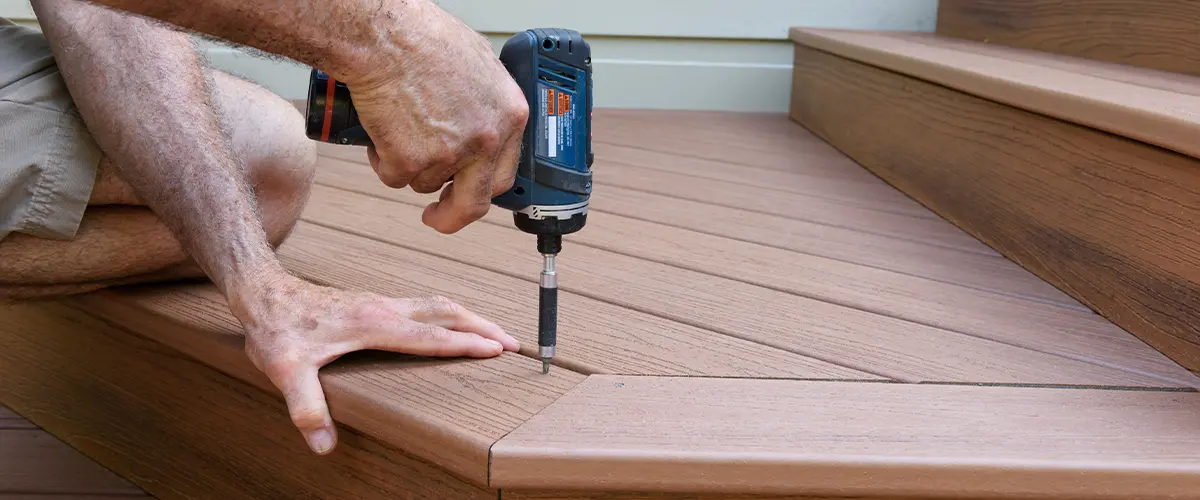
- Joist spacing: 16 inches on center for a straight lay, 12 inches when boards run diagonally, tighter again on stair treads
- Board gapping: composite and PVC expand with temperature, so a board butted tight in January has nowhere to go in July
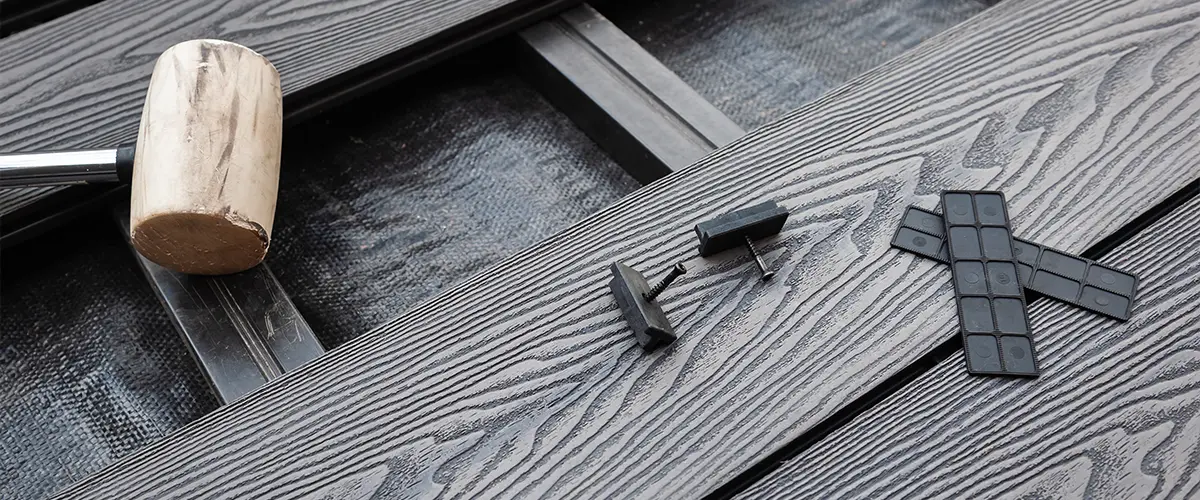
- Fasteners: hidden systems vary by collection, and grooved-edge boards need the matching clip
Requirements shift from one collection to the next, so the current guides are the reference: TimberTech installation resources and Trex installation information.
Heat Retention
TimberTech markets Advanced PVC as up to 30° cooler to the touch than typical composite, rating its own composite tiers as average. Trex answers with SunComfortable technology in Transcend Lineage, which it says cuts heat buildup by up to 35°F against its standard boards.
Both are blunt about the limits. Any deck gets hot in August sun, and dark colors run hotter whatever they’re made of.
So if bare feet are the priority, the real matchup is Advanced PVC against Transcend Lineage. Standard composite from either brand runs warmer.

Moisture Resistance
TimberTech rates Advanced PVC best for moisture and its composite collections between better and good by tier. No wood in the core means nothing to absorb water or feed mold.
Trex’s composite core is 95% recycled wood fiber and plastic film. Its only PVC line is Refuge, built for fire zones, so the mainstream Trex lineup has no direct counterpart to Advanced PVC.
Docks are the exception worth knowing about. Trex approves its boards for full water contact, including extended submersion and daily tidal cycles, which is a claim TimberTech doesn’t make. For a low-clearance or ground-level build where airflow underneath is limited, the capping difference tips things back toward TimberTech.
Scratches, Stains, and Traction
- Scratches: Trex names Signature its most scratch-resistant board with Transcend close behind, and installer feedback generally favors Trex composite here. TimberTech's Advanced PVC closes that gap, since a PVC cap resists scuffing better than a wood-fiber cap whatever the brand. Worth raising early if you have big dogs.
- Stains: even footing. Both brands back their lines with dedicated fade-and-stain warranties, listed in the table above.
- Fasteners: hidden systems vary by collection, and grooved-edge boards need the matching clip
For a deck that spends four months under Nebraska ice, that traction guidance is worth having in writing before you choose.
Appearance and Color Options
TimberTech builds each collection around a distinct look. Legacy is hand-scraped and artisanal, Reserve goes rustic and reclaimed, Terrain keeps a traditional linear grain, and Vintage chases exotic hardwoods like ipe and mahogany.
Trex organizes by tier. Enhance and Select stay simple with monochromatic and multi-tonal shades, Transcend and Lineage carry the broadest color range, and Signature leans into photorealistic woodgrain.
Both offer multi-width and curveable boards on their premium lines, which opens up patterns a single width can’t.

Maintenance
Neither brand asks much of you. None of the sanding, staining, painting, or sealing stuff, which is most of the reason people leave wood behind.
Upkeep comes down to soap, water, and an occasional gentle pressure wash, plus clearing leaves and pollen before they sit long enough to invite surface mold.
That matters more on wood-fiber composite than on PVC. Trex also flags one specific hazard: viscose-backed outdoor rugs can bleed dye into a board and leave a stain that’s very hard to lift.
TimberTech’s wood-free PVC has a slight edge for anyone chasing the lowest possible maintenance, since there’s no wood fiber in there to hold moisture.
Why We Usually Reach for TimberTech
We install both, and on most jobs we recommend TimberTech composite. The reason has less to do with performance than with predictability.
TimberTech we can buy off the shelf locally, and delivery dates hold. Trex’s higher tiers, Transcend especially, usually have to be special-ordered, and those dates move on you.
When you finish most builds in about three days, waiting three weeks on a delivery is the thing that wrecks a schedule.
The polymer capping is the other half of it. Slightly better against water damage, slightly more expensive, and in our experience that difference pays for itself.
None of which makes Trex a bad choice. It’s a good board at a lower entry price, and if the color you want is in the Trex lineup and your timeline has room in it, we’ll build you a Trex deck without hesitation.
Either way, ask your contractor whether the collection you want is sitting in a local warehouse or coming off a truck in three weeks.
Best Options by Budget and Priority
Priority | TimberTech | Trex |
Lowest entry price | Prime / Prime+ | Enhance |
Best value, mid-range | Terrain or Reserve | Select |
Best all-around performance | Legacy | Transcend |
Coolest underfoot | Vintage / Landmark | Transcend Lineage |
Longest warranty | Advanced PVC | Signature or Transcend Lineage |
Docks and water contact | Not rated for submersion | Any Trex composite |
Wildfire / WUI zones | Reserve, or Vintage / Landmark / Harvest | Refuge |
Low-clearance, poor airflow | Advanced PVC or capped composite | Any composite, with airflow underneath |

Best Fit for Nebraska Weather
A deck here takes humid 90°F stretches in July, sub-zero nights in January, hail that arrives with almost no warning, and spring rain that comes down all at once.
Freeze-thaw does the most damage and gets the least attention. Water works into a material, freezes, expands, and repeats that a few dozen times a year. Anything that drinks moisture pays for it eventually, so a wood-free PVC core or a well-capped composite board is the safer build in this climate.
On a south or west-facing deck, heat is what people notice first, especially in a dark color. That’s where TimberTech Advanced PVC or Trex Transcend Lineage earns the premium.
Then there’s the ice, four solid months of it in a bad year. TimberTech’s slip-resistance edge on PVC and Trex’s rock-salt guidance both carry more weight here than they would somewhere with a mild winter.
Hail is the open question. Neither manufacturer publishes a rating, so local experience is all anyone has to go on.
Questions to Ask When Comparing Contractor Quotes
Two quotes that both say “composite decking” can describe wildly different projects. These are the questions that pull the difference into the open:
- Which exact collection is quoted, down to the name, since the brand alone tells you almost nothing about price or performance
- Whether railing, fascia, fasteners, and substructure are included, or the number covers boards only
- What warranty term applies to that specific collection, and whether it prorates
- Whether the installer is certified for that product line, and how that affects your coverage
- What happens if a board gets damaged during install, and who absorbs it
- How the quote handles stairs, curves, and difficult site access
- What the timeline looks like, and whether board lead time is built into it
FAQs
Is TimberTech or Trex better?
Neither one, categorically. Both build entry-level through premium products, so a fair comparison happens at the collection level. Setting TimberTech Legacy next to Trex Enhance tells you about the tiers, not the brands.
Which is more expensive?
TimberTech covers composite for 25 years on Prime, Prime+, and Premier, 30 years on Legacy, Reserve, and Terrain, and offers lifetime residential coverage on Advanced PVC. Trex runs from 25 years on Enhance up to 50 on its top lines. The full breakdown is in the warranty table above.
What warranty do they offer?
TimberTech Advanced PVC claims up to 30° cooler to the touch, and Trex Transcend Lineage claims up to 35°F less heat buildup than its standard boards. Both still get hot in direct sun, and color choice matters nearly as much as material.
Which decking lasts longer?
TimberTech Advanced PVC carries a lifetime residential warranty against Trex’s longest terms of 50 years. In practice, how long your deck lasts comes down to the quality of the framing underneath it, whether it was installed to spec, and whether anyone cleans it, far more than the number printed on the warranty.
Get a Real Number for Your Deck
Every range on this page is a national average, and your actual project is a specific size, on a specific site, in a specific Nebraska backyard. Deck Bros installs both brands and can walk you through which collection makes sense for your budget and how your yard actually sits.
Call us at (402) 600-0810 or contact us through our website and let’s find out what you need.