
Living between Omaha and Lincoln means dealing with wind that doesn’t quit. Spring storms roll across open prairie with nothing to slow them down. Your deck takes the brunt of those gusts, and poor design shows its weakness fast. Loose boards start lifting. Railings shake. Furniture ends up in your neighbor’s yard.
Building a deck that stands up to Nebraska wind takes more than standard construction methods. The corridor between these two cities sees sustained winds that test every fastener, joint, and structural connection. You need design choices that account for real conditions, not just minimum code requirements.
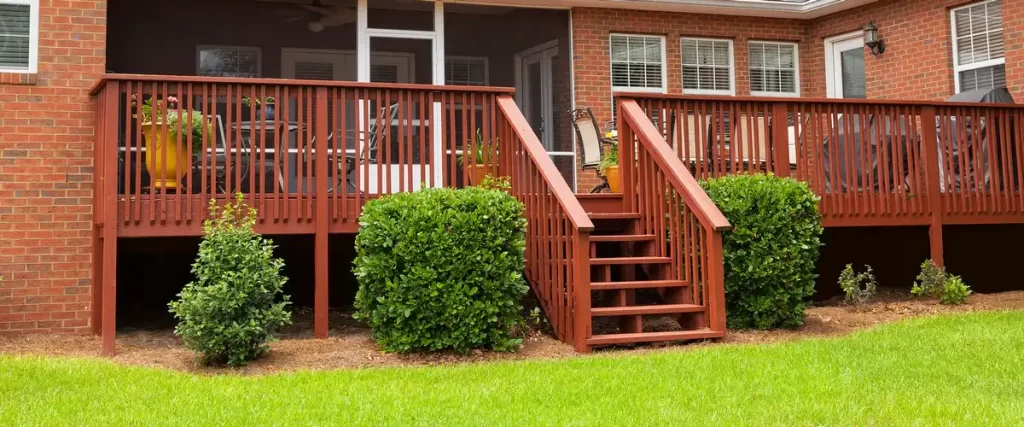
Why Wind Hits Harder in the Omaha–Lincoln Area
The Great Plains earned their reputation honestly. Flat terrain lets wind build speed without interference from hills or dense forests. When storms push through the corridor, your property sits exposed to forces that suburban neighborhoods in other regions never experience.
Spring brings the strongest sustained winds, often combined with severe thunderstorms. Summer storms move fast but hit hard. Even winter wind chills test how well your deck materials hold up under temperature stress. A structure that seemed solid in calm conditions can develop serious problems once wind loads apply constant pressure.
Height amplifies wind effects. A second-story deck catches stronger gusts than ground-level construction. Corner lots face wind from multiple directions instead of having neighboring houses provide some shelter.
Foundation and Footings That Won’t Shift
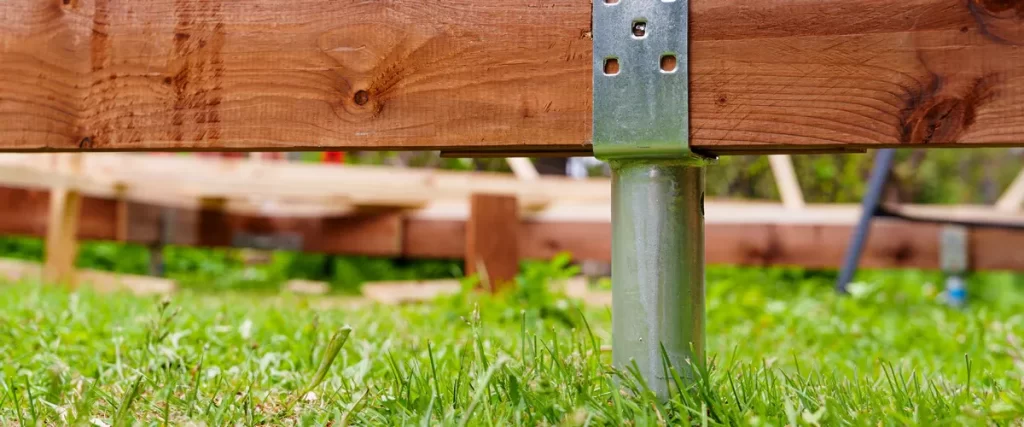
Your deck’s stability starts below ground. Frost heaving causes problems throughout Nebraska when water freezes and expands in the soil around footings. That movement creates stress on the entire structure, and wind magnifies every weakness.
Footings must extend below the frost line, which sits around 48 inches deep in the Omaha–Lincoln corridor. Shallow footings shift during freeze-thaw cycles. Once they move, connections loosen, and the deck loses its ability to resist lateral forces from wind.
Concrete piers provide better wind resistance than precast blocks. Poured concrete creates solid mass that anchors your deck properly. The diameter matters too. Wider piers spread loads across more soil and resist uplift forces when wind tries to lift one side of your deck.
| Footing Type | Depth Needed | Wind Resistance | Cost Factor |
| Precast blocks | 36-48″ | Moderate | Low |
| Poured concrete piers | 48-54″ | High | Medium |
| Helical piles | Variable | Very high | High |
| Sonotube forms | 48-54″ | High | Medium-low |
Helical piles work beautifully in areas with difficult soil conditions. They screw deep into stable ground and resist both vertical and lateral movement. That stability becomes incredibly valuable during severe wind events.
Framing Techniques That Handle Lateral Loads
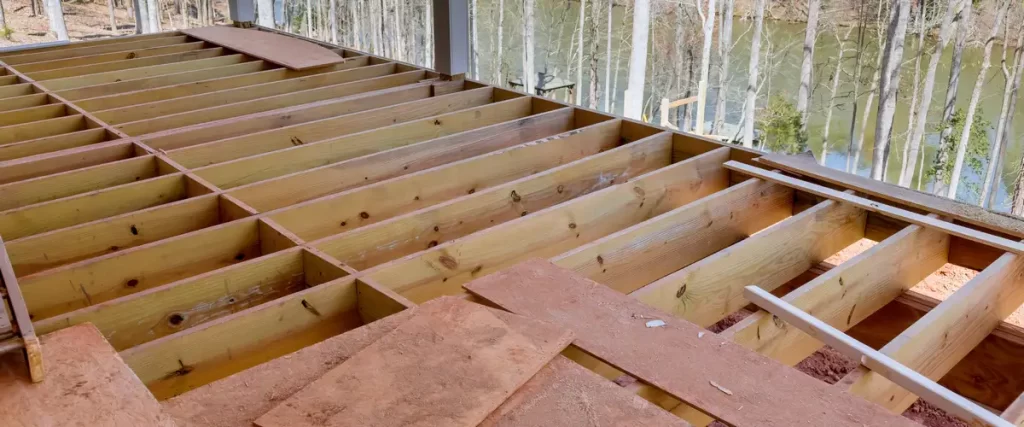
Standard deck framing assumes mostly vertical loads from people, furniture, and snow. Wind creates horizontal forces that push and pull on your entire structure. Connections need to handle shear forces that ordinary construction methods can’t resist.
Bolted ledger boards attach your deck to your house with through-bolts instead of lag screws. Through-bolts transfer loads completely through the rim joist and band board. Lag screws can gradually loosen under repeated stress, especially when wind buffets your deck daily.
Hurricane ties and joist hangers rated for wind uplift prevent floor joists from separating from beams. Standard hangers meet code minimums but engineered connectors provide much better performance. The cost difference is minimal compared to repairing wind damage.
Blocking between joists stops them from twisting and adds rigidity to the entire deck frame. Solid blocking works better than cross-bracing in most applications. You want continuous support that prevents any individual component from moving independently.
Corner bracing deserves special attention in wind-resistant design. Diagonal braces running from posts to beams create triangulated support that resists racking. This keeps your deck square even when wind tries to push it sideways.
Decking Attachment Methods That Stay Put
Surface decking seems simple until the wind gets underneath and creates uplift. Regular face screws pull out when boards try to cup or twist. You need fastening methods designed for the forces that Nebraska’s weather applies.
Hidden fasteners that clip into grooved deck boards create stronger connections than visible screws. The clips lock boards down from the sides, preventing the cupping that leads to loose connections. Many composite decking systems include clips specifically engineered for high-wind areas.
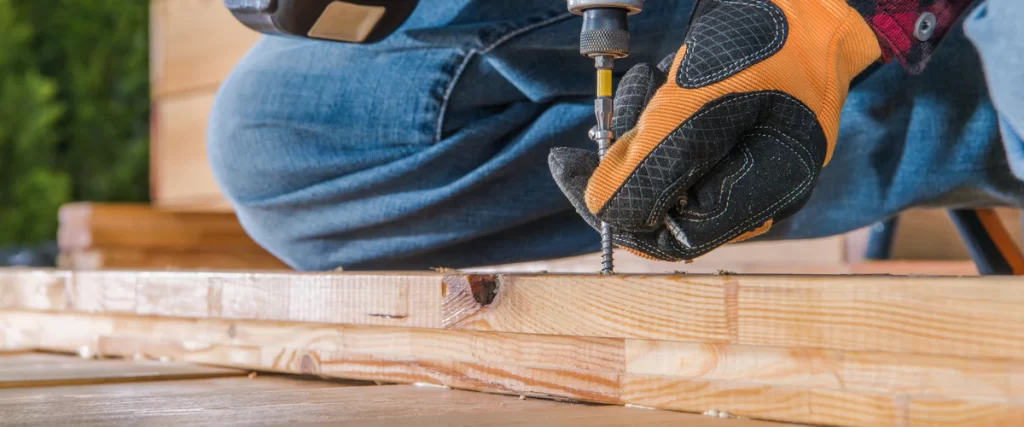
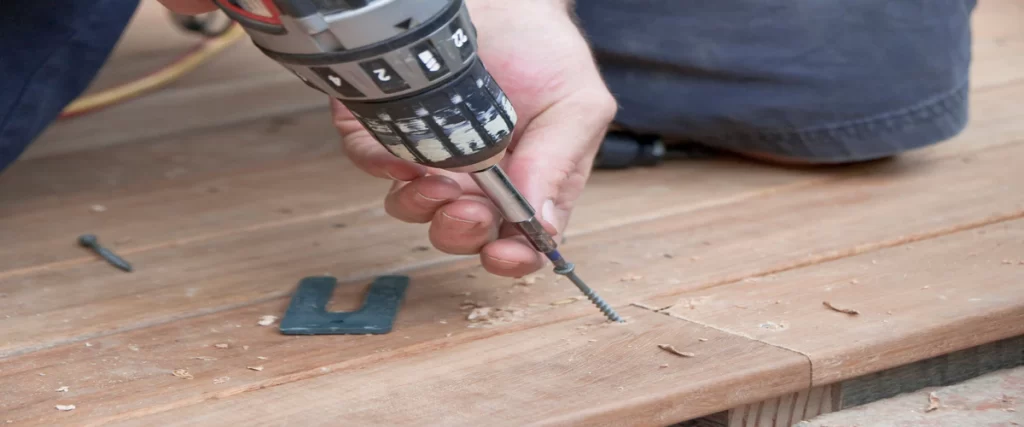
When using traditional face screwing, add fasteners at closer spacing than standard recommendations. Instead of one screw every 16 inches, go with 12-inch spacing. The additional fasteners cost pennies but dramatically improve wind resistance.
Screws outperform nails in every wind resistance test. Nails can work loose gradually as wood expands and contracts through seasonal changes. Screws maintain their grip through those movements. Stainless steel or coated screws resist corrosion that weakens connections over time.
End boards and perimeter boards need extra attention. These catch the most direct wind force. Double up on fasteners here and consider adding construction adhesive between the board and joist for extra hold.
Railing Systems Engineered for Wind Pressure
Railings face intense pressure during wind events. A solid panel catches the wind like a sail. Spacing and design determine whether your railing system helps or hurts overall deck stability.
Building codes set maximum spacing for balusters based on safety, typically 4 inches. That spacing also allows wind to pass through rather than creating a solid barrier. Glass panel railings look modern but need much heavier posts and mounting systems to handle wind loads safely.
Posts require deeper embedment and stronger connections when railings must resist wind. Surface-mounted posts rely entirely on their fasteners and backing structure. Through-bolted posts that extend through the deck and attach to framing below provide far better wind resistance.
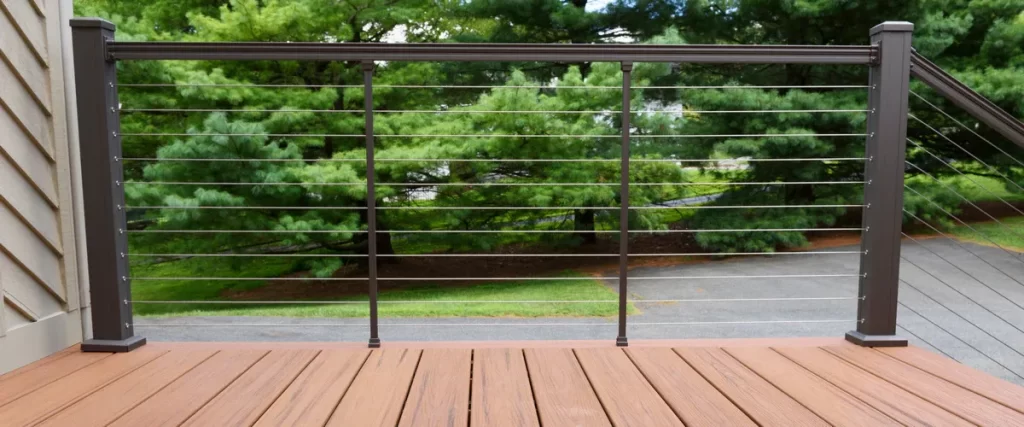
Cable railing systems minimize wind resistance while meeting safety codes. The thin cables create very little surface area for wind to push against. That reduces stress on posts and connections. Properly tensioned cable systems also add some lateral stability to the overall deck structure.
Metal railings generally handle wind better than wood. Aluminum and steel flex slightly under load but return to position without damage. Wood can split or crack when stressed repeatedly. Composite railing systems fall somewhere between, offering decent performance with minimal maintenance.
Roof Structures and Pergolas That Won’t Fly Away
Adding a roof over part of your deck creates wonderful shade and weather protection. It also creates a massive sail that catches every gust. Attachment and design become absolutely critical.
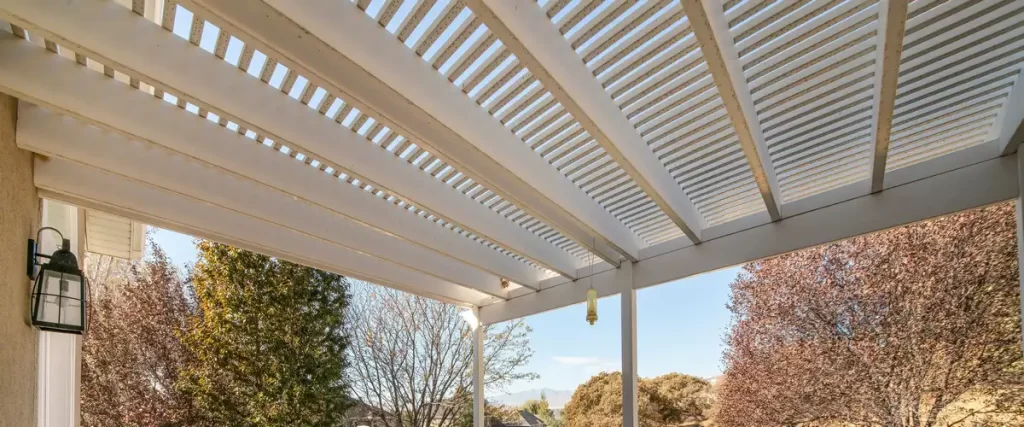
Pergolas with open slat roofs handle wind reasonably well. The gaps let pressure equalize rather than building up underneath. Solid roofs need engineering that accounts for both downward loads like snow and upward suction from wind.
Posts supporting roof structures must anchor independently into concrete footings. They can’t simply bolt to deck framing and expect to resist the forces involved. Separation between the deck support system and the roof support system prevents problems from cascading through the entire structure.
The Nebraska State Building Code, which follows the International Building Code with state amendments, requires structural calculations for covered structures. Your local building department can provide wind load maps specific to the Omaha–Lincoln corridor. These maps show the design wind speeds your structure must withstand.
Roofing materials matter too. Metal roofing weighs less than shingles and handles high winds better. Proper fastening becomes even more important than material choice. Every roof panel needs adequate attachment to resist uplift.
Ongoing Maintenance That Prevents Wind Damage
Even well-built decks need regular inspection and maintenance. Wind finds the weak points that develop over time. Catching small problems early prevents them from becoming structural failures.
Check all connections annually, especially after major storms. Tighten any bolts that have loosened. Look for cracks developing around fasteners in wood. Replace corroded screws or bolts before they fail completely.
Inspect the ledger board flashing and make sure water hasn’t compromised the connection to your house. Water damage weakens wood and allows connections to deteriorate. Wind takes advantage of any weakness.
Clean debris from between deck boards and under the structure. Trapped moisture accelerates rot. Rotted wood can’t hold fasteners properly, and wind resistance drops dramatically once connections start failing in compromised lumber.
Furniture and accessories should either be heavy enough to stay put or easy to move before storms. Lightweight chairs become projectiles in severe wind. Securing or storing them prevents both loss and potential damage to your deck or house.
Professional Construction Versus DIY Risk
You’ve read about footings, framing, fasteners, and all the details that make wind-resistant decks work. Maybe you’re feeling confident about tackling this yourself. Or maybe you’re realizing how many ways this can go wrong.
Wind damage happens suddenly but results from cumulative design and construction weaknesses. A deck that seems fine for years can fail catastrophically during one bad storm. The repairs cost far more than building it right initially, assuming the damage doesn’t extend to your house or cause injury.
Professional deck builders working in the Omaha–Lincoln corridor understand local wind patterns and soil conditions. They know which techniques work and which create problems down the road. Building permits and inspections catch issues during construction instead of after your deck fails.
We’ve built decks throughout the corridor that stand up to everything Nebraska weather throws at them. Our crew knows the difference between minimum code compliance and actual long-term performance. You can review our deck building services to see how we approach wind-resistant construction, then call us at (402) 369-5724 or message us here to discuss your project. Let us handle the engineering while you plan how you’ll use your new outdoor space.