
Nebraska throws everything at your deck. Summers hit 95°F and above. Winters swing down to single digits, sometimes colder. The ground freezes, thaws, and freezes again, sometimes in the same week. So which decking material actually holds up?
Composite wins for low maintenance and freeze-thaw resilience. Wood wins on upfront cost and that classic natural look, but it demands consistent care to survive Nebraska’s swings.
If you’re trying to choose between the two, here’s what you actually need to know before you commit.
Nebraska Weather Hits Different
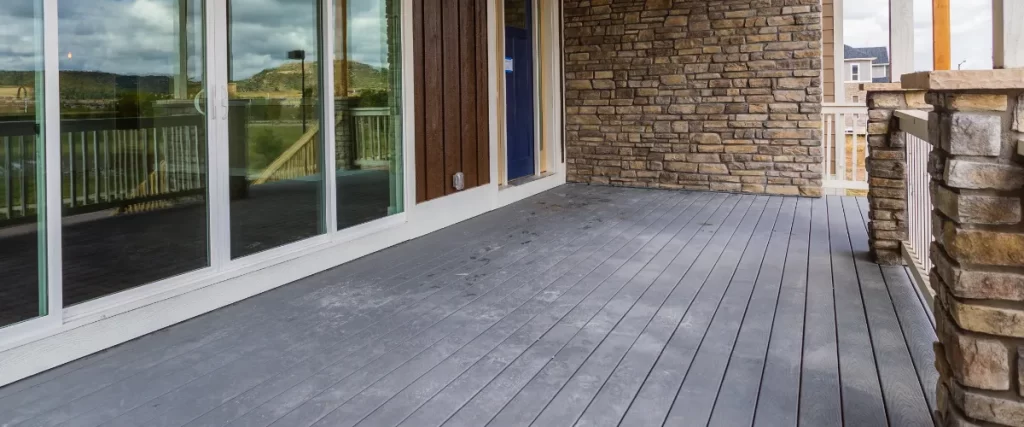
Most decking guides are written for mild climates. Nebraska is not a mild climate.
According to NOAA’s National Centers for Environmental Information, Nebraska has experienced 66 confirmed weather and climate disaster events exceeding $1 billion in losses between 1980 and 2024. The state gets blizzards, ice storms, severe wind, summer hailstorms, and temperatures that routinely swing 50 or 60 degrees between seasons. Your deck doesn’t get a break.
The specific challenge for decking materials is the freeze-thaw cycle. Water gets into tiny cracks or wood fibers, freezes, expands, thaws, and then contracts. Repeat that dozens of times over a single winter, and materials that looked fine in September start splitting, warping, and softening by April. This is the central issue when comparing wood and composite in a place like Omaha.
How Wood Actually Performs Here
Wood has a warmth and character that composite genuinely can’t replicate. A freshly stained cedar deck looks beautiful, and there’s a reason homeowners have been choosing natural wood for generations.
The honest part, though, is that Nebraska winters are hard on it.
Pressure-treated pine, the most common and affordable wood option, absorbs moisture readily. When that moisture freezes inside the grain, boards can check (develop small cracks along the surface), split, and warp. Without consistent sealing every one to two years, the deterioration picks up pace fast. Cedar and redwood perform better thanks to their natural oils, but they still require the same protective maintenance routine in a wet-cold climate like eastern Nebraska.
Here’s what owning a wood deck in Nebraska realistically looks like over time:
- Annual inspection every spring for soft spots, splitting, or lifted fasteners
- Sanding and re-staining every 1 to 3 years, depending on sun and moisture exposure
- Board replacement as individual planks deteriorate, especially near the ledger or any area where water pools
- Fastener checks since freeze-thaw cycles work nails and screws loose over time
None of this is impossible. Some homeowners genuinely enjoy the maintenance routine. But it’s a real time and cost commitment, and skipping even one season of sealing can mean catching up on damage that snowballed.
If you’re curious about what happens when wood decks don’t get enough attention going into winter, our blog on the top pre-winter deck maintenance mistakes is worth reading before your next cold season.
How Composite Holds Up Against Nebraska’s Extremes
Composite decking is made from a blend of recycled wood fibers and plastic, then wrapped in a polymer cap. That cap is the key difference. Water can’t soak into the core the way it does with natural wood, which means freeze-thaw cycles have far less to work with.
In practical terms: composite boards maintain their shape through repeated freezing and thawing far better than pressure-treated pine. They don’t splinter, they don’t check, and they don’t need to be sanded or re-stained every couple of years. A spring cleaning with soap and water is usually all the maintenance they need.
| Category | Pressure-Treated Wood | Composite |
| Upfront cost | Lower | Higher |
| Freeze-thaw performance | Moderate (needs sealing) | Strong |
| Annual maintenance | High | Low |
| Lifespan in NE climate | 10 to 15 years with upkeep | 25 to 30+ years |
| Splinter risk | Yes, over time | No |
| Warranty | Limited | 25 to 50 years typical |
| Best for | Budget-focused builds | Long-term value |
The higher upfront cost of composite tends to even out over time because you’re not spending on sealant, stain, and periodic board replacement year after year.
One thing to keep in mind: composite boards in dark colors can get noticeably hot underfoot during Nebraska’s sunny summers. Lighter colors handle the heat better and stay more comfortable barefoot. It’s a small thing, but worth factoring in during the selection process.
What the Nebraska Climate Specifically Demands
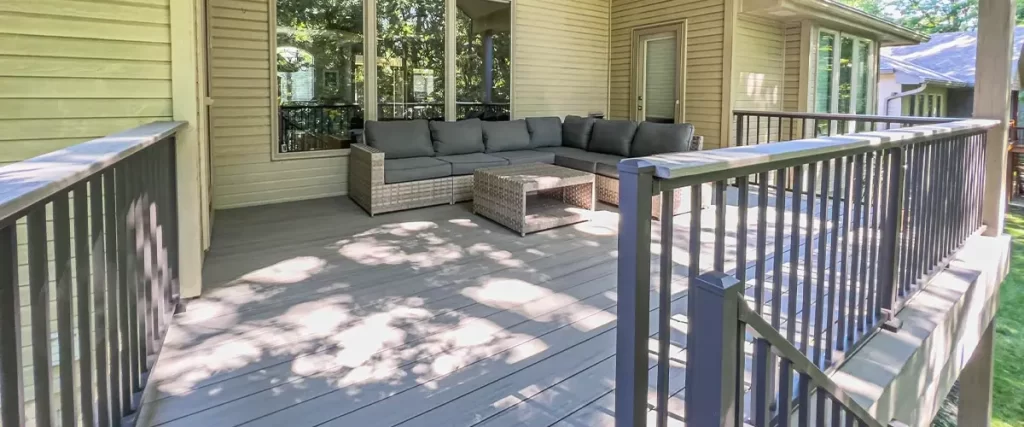
The Nebraska State Climate Summary from NOAA documents that temperatures in Nebraska have risen more than 1.6°F since the start of the 20th century, with warming concentrated in winter and spring. That means more active freeze-thaw cycling, not less. Winters are still cold, but with more fluctuation around the freezing mark, which is actually worse for decking materials than consistently deep cold.
This matters because materials that sit at or just below freezing, repeatedly, experience more expansion and contraction stress than those that stay frozen solid for months. Nebraska’s climate pattern puts wood under real strain.
Real Talk: Which One Is Right for Your Situation?
Neither material is wrong. They serve different homeowners.
Wood makes sense if your budget is tight upfront, you genuinely enjoy hands-on maintenance, or you’re building something covered or partially shaded where moisture exposure is lower. Cedar on a covered porch, for example, can look stunning for decades with proper care.
Composite makes more sense if you want something that performs reliably through Nebraska winters without an annual maintenance checklist, if you’re building an exposed elevated deck, or if you’re thinking about the 15 to 20-year picture rather than just the build cost.
Speaking of building, if you’re weighing options beyond just the decking surface, our blog on how much a new deck costs in Omaha breaks down how material choices affect overall project pricing.
FAQ
Does composite decking get slippery in Nebraska winters? Quality capped composite boards have textured surfaces that provide decent traction even when wet. Ice forms on any surface, so you’ll still want a plastic shovel handy, but composite generally handles snow and melt conditions safely.
How long does pressure-treated wood actually last in Nebraska? With consistent sealing and staining, 10 to 15 years is realistic. Without it, you may be looking at significant board replacement within 7 to 10 years, depending on the deck’s exposure.
Can I mix composite decking with a wood substructure? Yes, and many Nebraska homeowners do. Composite boards on top, pressure-treated framing underneath. The framing stays dry and protected, so this is a common and cost-effective approach.
Is composite worth the price difference in Nebraska specifically? Given the freeze-thaw patterns here, yes, for most homeowners. The maintenance savings over 20 years typically offset the higher material cost, and the performance through Nebraska winters is genuinely better.
You Could Also Just Call Us
Honestly, if reading this made the decision feel more complicated rather than less, that’s pretty normal. Choosing between materials involves your budget, your timeline, your yard, and what Nebraska weather has already done to any existing structure you’re working around.
That’s exactly what Deck Bros does every day for homeowners across Omaha and the surrounding area. We’ll look at your specific situation, tell you what we’d actually recommend, and give you a straight answer on cost and timeline. Check out our deck building services to see what we build and how we work.
Ready to talk? Call us at (402) 600-0810 or message us here.